top of page
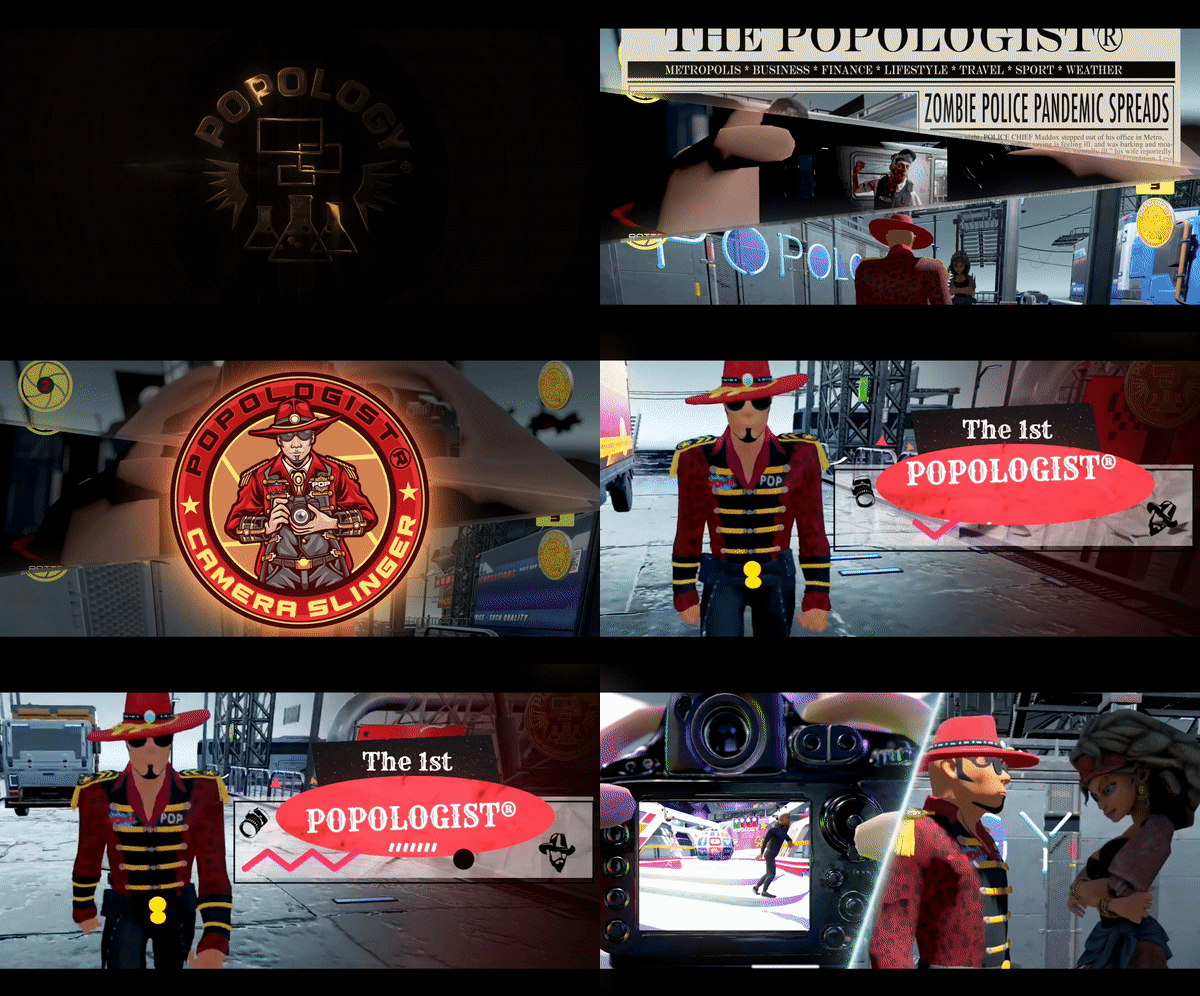
1st POPOLOGIST®
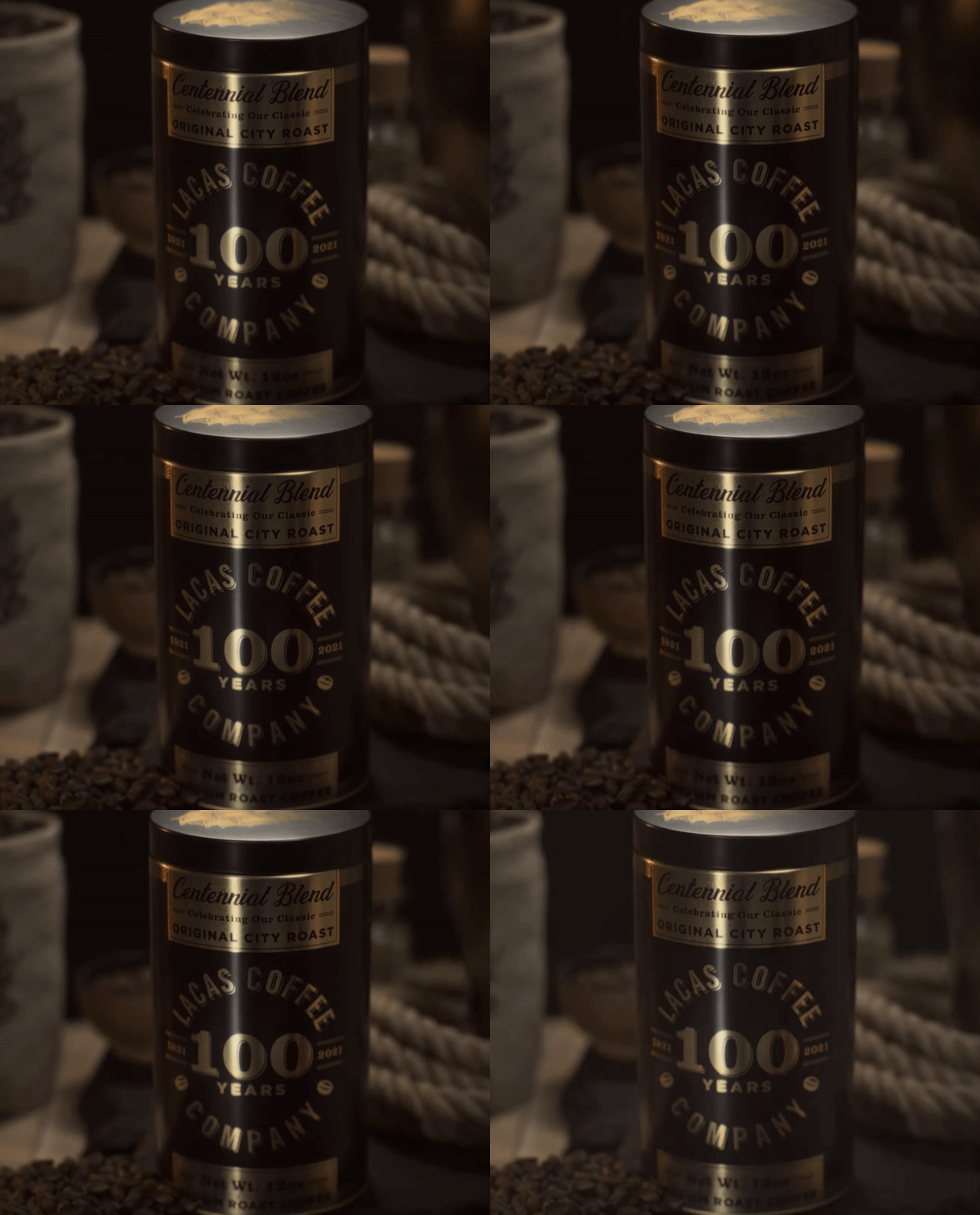
Lacas Coffee
Lacas Coffee
Credit Yak
Buy Your Swagg on POPOLOGIST®
The POPOLOGIST® Camera Slinger Video Game
POPOLOGY® Networks
1st POPOLOGIST® Pillow Swag
Science Under Nature
1st POPOLOGIST® Camera Slinger T Shirt
Color-Fuchsia Pink POPOLOGY® Underwear
Funky i Puppet

The Story of The Meters: From Humble Beginnings to Funk Pioneers

In the mid-1960s, in the vibrant musical heart of New Orleans, a group of young musicians unknowingly laid the groundwork for what would become the blueprint of funk.


ree

The Meters weren’t just another band; they were a sonic force, blending deep-pocket grooves with a raw, stripped-down style that would influence countless artists across funk, rock, and hip-hop.


But to understand their rise, we have to go back to their roots—when four gifted musicians, all steeped in the rhythms of their hometown, came together to create something groundbreaking.


The Early Days: The Birth of a Groove

The story begins with Art Neville, a young keyboardist with a knack for soulful melodies and a natural leadership presence.


By the early 1960s, Art had already made a name for himself with The Hawketts, recording the now-classic New Orleans anthem Mardi Gras Mambo. After a stint in the Navy, he returned home and began forming a new group—one that would focus on tight instrumentals, infectious rhythms, and an unmistakable New Orleans funk feel.


ree


Neville first linked up with George Porter Jr., a talented bassist who had been cutting his teeth in local bands. Porter had a deep, rolling groove, the kind that made your body move before you even realized it. His style would later define the band’s sound, anchoring their music in an undeniable pocket.


On guitar was Leo Nocentelli, a master of sharp, syncopated riffs. Nocentelli’s playing wasn’t about flashy solos—it was about rhythm, feel, and a sense of space. His choppy, percussive approach would become one of The Meters' signature sounds, inspiring generations of funk guitarists.


ree


Finally, there was Joseph "Zigaboo" Modeliste, the drummer whose explosive yet controlled beats redefined what funk drumming could be. Zig’s drumming didn’t just keep time—it danced, it breathed, and it pushed the groove forward with a syncopation that few had heard before.


ree


Together, these four musicians didn’t just play music—they communicated through rhythm, locking in so tightly that their jams felt effortless, hypnotic, and deeply infectious.


The Formation & Breakthrough

By 1965, Art Neville, George Porter Jr., Leo Nocentelli, and Zigaboo Modeliste were playing together as a backing band for various New Orleans artists.


Under the guidance of legendary producer Allen Toussaint, they became the go-to session musicians for many of his productions. But Toussaint saw something special in them—not just as sidemen, but as a band with their own identity.


Toussaint and Marshall Sehorn, a well-known New Orleans music figure, helped the group land a deal with Josie Records, and soon, The Meters were born.


ree

The Meters (1969) – A New Funk Sound

In 1969, The Meters released their self-titled debut album, The Meters. Unlike many funk bands of the era, The Meters didn’t rely on big horn sections or overly polished production. Their music was raw, stripped down, and all about the groove.


The album’s opening track, "Cissy Strut," became an instant classic—its tight guitar riff, rolling bassline, and infectious drum groove were pure funk perfection. The song climbed the Billboard R&B chart, proving that this new style of funk had mass appeal. Other tracks, like "Sophisticated Cissy" and "Ease Back," showcased their deep grooves and hypnotic, minimalist approach.


Unlike James Brown’s band, which emphasized the leader’s vocals and call-and-response energy, The Meters let the instruments do the talking. The result? A gritty, instrumental funk style that set them apart from anyone else at the time.


Look-Ka Py Py (1970) – Refining the Groove

Building on the success of their debut, The Meters returned in 1970 with their second album, Look-Ka Py Py. This record saw the band refining their sound even further, locking into even tighter grooves with an almost telepathic connection between the members.


ree


The title track, "Look-Ka Py Py," is a masterclass in funk rhythm—Zigaboo’s drum work is more intricate, Nocentelli’s guitar more staccato, and Porter’s bass more driving than ever. The album also features "Pungee" and "Oh, Calcutta!", which further established their signature deep-groove, no-frills approach.


This album wasn’t just about musicianship—it was about feel. The Meters were making music that sounded effortless but was technically complex, a balance few could achieve.


ree

The Meters’ Influence & Legacy

By the time they released their first two albums, The Meters had already built a reputation as funk pioneers. Their sound would go on to influence everyone from The Red Hot Chili Peppers to hip-hop producers like Dr. Dre, who frequently sampled their grooves.


Though their early work was instrumental, their impact was massive. They weren’t just playing music—they were creating a language of rhythm that would inspire generations of musicians.

As the 1970s progressed, The Meters would expand their sound, add vocals, and eventually evolve into a larger funk powerhouse. But their first two albums remain some of the purest, most essential funk ever recorded.


ree


Their journey had only just begun, but with The Meters and Look-Ka Py Py, they had already secured their place in music history.


The Meters: Funk’s Evolution Through the 1970s

By the early 1970s, The Meters had already carved out their place in history with their first two albums, The Meters (1969) and Look-Ka Py Py (1970). Their stripped-down, hypnotic grooves had proven that funk didn’t need elaborate horn sections or complex arrangements to hit hard. It just needed the right feel, and The Meters had it in abundance.


ree


As they moved into the next phase of their career, The Meters began expanding their sound, incorporating more complex song structures, occasional vocals, and deeper experimentation—all while keeping their signature groove intact.


Struttin’ (1970) – A Funk Band Finding Its Voice

Fresh off the success of Look-Ka Py Py, The Meters wasted no time releasing their third album, Struttin’, in the same year. While still heavily instrumental, this record saw the band introducing more vocals, signaling a gradual shift toward a fuller, more song-oriented sound.


ree


One of the album’s standout tracks, "Chicken Strut," features playful, clucking vocalizations over a tight groove, showing off their New Orleans humor while staying true to their funk roots.


Other tracks like "Same Old Thing" and "Tippi-Toes" kept the infectious, syncopated rhythms that had already made them legends in the making.


This album also demonstrated Leo Nocentelli’s evolving guitar work—his rhythms were even sharper, his phrasing more intricate. George Porter Jr.'s basslines were beginning to take on a more melodic role, weaving between the drums and keys with a fluidity that few bassists could match.


ree


Even as they dabbled with vocals, The Meters remained a band built on feel, and Struttin’ was proof that they weren’t just a flash in the pan. They were here to stay.


ree

The Move to Reprise Records

Up until this point, The Meters had been releasing music under Josie Records, but by the early 1970s, Josie had folded. This led to a new opportunity: The Meters signed with Reprise Records (a subsidiary of Warner Bros.), opening the door for them to reach a larger, more mainstream audience.


With the switch to Reprise, their music began evolving in even bigger ways—introducing heavier production, richer instrumentation, and more vocal-driven tracks. This shift led to their fourth album, Cabbage Alley, marking a turning point in their sound.


ree


Cabbage Alley (1972) – Expanding the Sound

With Cabbage Alley, The Meters took a noticeable step toward a more expansive, sophisticated funk. The rawness of their early albums was still there, but now it was blended with smoother production and a broader range of influences, including elements of soul, R&B, and even rock.


Tracks like "Do the Dirt" and "You've Got to Change (You Got to Reform)" showed their increasing comfort with vocals, particularly with Art Neville stepping up as a more prominent frontman.


One of the album’s most memorable cuts, "Soul Island," proved that The Meters could still lock into a deep, hypnotic instrumental groove, while "Birds" introduced a slinky, blues-infused vibe that hinted at even more experimentation to come.


Critics and fans noticed the shift—The Meters were still undeniably funky, but they were no longer just an instrumental backing band. They were evolving into a fully realized funk powerhouse, capable of competing with the likes of Sly & The Family Stone, War, and The Isley Brothers.


ree


This transition set the stage for what would become one of their most celebrated albums: Rejuvenation.


Rejuvenation (1974) – The Meters at Their Peak

If Cabbage Alley was the bridge between The Meters’ past and future, Rejuvenation was the full realization of their potential.


This was The Meters at their funkiest, their tightest, and their most creative.


By 1974, funk had exploded into the mainstream, with artists like James Brown, Parliament-Funkadelic, and The Ohio Players dominating the airwaves. But The Meters had something special—an effortless, swampy groove that no other funk band could replicate.


Tracks like "People Say" and "Jungle Man" had undeniable hooks and more refined songwriting, proving that The Meters could craft radio-friendly funk without losing their authenticity.


And then, there was "Hey Pocky A-Way"—perhaps their most famous song. Rooted in New Orleans street parade rhythms, this track became a Mardi Gras anthem, capturing the city’s spirit while still delivering an irresistible funk groove.


Meanwhile, "It Ain’t No Use" showcased their ability to stretch out into longer, more soulful jams, with Art Neville’s voice dripping with emotion as the band built the groove to a slow-burning climax.


ree

Rejuvenation was widely praised, with Rolling Stone calling it one of the best albums of 1974. Even legends like Mick Jagger and Paul McCartney took notice—The Meters had officially become a musician’s musician band, respected by some of the biggest names in the industry.


The Meters’ Influence Grows

By the mid-’70s, The Meters weren’t just making records—they were becoming a serious touring band, opening for The Rolling Stones on their 1975 tour. This was a huge moment, exposing them to a massive rock audience that might not have otherwise heard of them.


Their sound had also started to influence a new generation of artists. Elements of The Meters' grooves could be heard in the music of:🎸 The Red Hot Chili Peppers, who later cited The Meters as a major influence.🎧 Hip-hop producers like Dr. Dre, who sampled their beats in countless classic tracks.🎶 New Orleans musicians who carried on their tradition, from The Neville Brothers to Galactic.


With their next albums, Fire on the Bayou (1975) and Trick Bag (1976), The Meters would continue to explore new musical directions, but Rejuvenation remains a high-water mark in funk history.


ree

The Legacy of the Early '70s

Through the early 1970s, The Meters had transformed from a tight instrumental band to a fully realized funk powerhouse. Their shift from raw grooves (The Meters, Look-Ka Py Py) to song-oriented funk masterpieces (Cabbage Alley, Rejuvenation) proved their ability to grow without losing their essence.


Even as funk evolved and changed, The Meters remained New Orleans' greatest musical export, influencing everyone from jam bands to rappers, from rock legends to contemporary funk revivalists.


Their journey was far from over, but by 1974, The Meters had already secured their place in music history.


ree


The Meters’ Influence: From Funk to Hip-Hop and Beyond

The Meters weren’t just a great funk band—they were architects of groove. Their music was so pure, raw, and rhythmically tight that it became a blueprint for countless genres, from funk and R&B to hip-hop and modern jam bands.


Even though they never achieved mainstream superstardom, their influence runs deeper than fame. Their sound shaped everything from the New Orleans music scene to the foundations of hip-hop, house, neo-soul, and even electronic music.


The Meters & Hip-Hop: The Most Sampled Funk Band You Never Knew

When hip-hop producers in the 1980s and ‘90s started digging through crates of old records, they discovered something magical in The Meters' music:


ree

🔥 Drum Breaks – Zigaboo Modeliste’s drumming was so tight and funky that it became a go-to for breakbeats.🎸 Deep Grooves – Leo Nocentelli’s guitar and George Porter Jr.'s basslines provided instant head-nodding loops.🎤 Stripped-Down Instrumentals – The Meters' early tracks had just enough space for MCs to rap over.

Soon, their music was being chopped, looped, and flipped into some of the greatest hip-hop tracks ever made.


Classic Hip-Hop Songs That Sampled The Meters:

🔹 "Buckingham Palace" – Raekwon (1995) → Uses "Cissy Strut"

🔹 "Oh My God" – A Tribe Called Quest (1993) → Uses "Just Kissed My Baby"

🔹 "Time 4 Sum Aksion" – Redman (1992) → Uses "People Say"

🔹 "Welcome to the Terrordome" – Public Enemy (1990) → Uses "Hey Pocky A-Way"

🔹 "I Ain’t No Joke" – Eric B. & Rakim (1987) → Uses "Cissy Strut"

And that’s just the beginning. Their influence even spread into West Coast hip-hop, with Dr. Dre and other G-funk producers borrowing from their grooves.


ree


The Meters & Funk’s Next Generations

The Meters’ tight, instrumental funk style also had a massive impact on other funk legends and jam bands:

🎸 Parliament-Funkadelic & Bootsy Collins → Borrowed their syncopated grooves and tight rhythm section.


🎷 The Red Hot Chili Peppers → Covered "Africa" and built their early style on Meters-like funk licks.


🎻 Medeski, Martin & Wood / Soulive → Took their jazz-funk approach into the modern era.🎵 The Roots & D’Angelo → Used The Meters’ swinging, laid-back funk to shape the neo-soul movement.

Even today, artists like Vulfpeck, Thundercat, and Anderson .Paak carry on The Meters’ tradition of deep, pocket-driven grooves.


ree


What The Meters Did That

No One Else Has (Or Ever Will)

While many artists played funk, The Meters did something unique and irreplaceable:

🎼 They invented a new language of groove.Unlike James Brown, who focused on tight horn sections and call-and-response, The Meters played instrumental funk with space, swing, and deep syncopation.


Their music wasn’t about flashy solos—it was about locking into a pocket so deep, you never wanted to leave it.


🌀 They made simplicity feel complex.A song like Cissy Strut has only a few parts, but the way they interlock and evolve makes it endlessly listenable. They had a way of taking minimalistic grooves and making them sound massive.


💿 They are one of the most sampled yet underrated bands in history.Other funk bands got bigger fame, but The Meters became hip-hop’s secret weapon—the band everyone samples but doesn’t realize they love.


ree

🎶 They kept New Orleans funk alive.Even though funk became commercialized, The Meters stayed true to the rhythmic roots of New Orleans, keeping the spirit of second-line grooves alive in everything they did.


👑 They were the ultimate band’s band.The Rolling Stones, Paul McCartney, Dr. John, and countless others worshiped them. They never needed to chase pop stardom—the greats already knew who they were.


ree


The Groove Never Dies

The Meters might not have been the most famous funk band. But their fingerprints are everywhere—from hip-hop’s biggest beats to the DNA of modern funk, R&B, and jam bands.


ree

Their legacy isn’t in gold records—it’s in every head nod, every drum break, every deep groove that makes you move without thinking.


Their music is still alive. It’s in hip-hop, in jam sessions, in sampled loops, in the way we feel rhythm without even knowing why.

And that’s what makes them immortal. 🏆 🎶


ree

ree

ree

ree


Foreigner was formed in 1976 by British guitarist Mick Jones, along with ex-King Crimson multi-instrumentalist Ian McDonald and American vocalist Lou Gramm. The band's name reflected the fact that the lineup consisted of both British and American members, making someone in the group a “foreigner” no matter where they played.


ree

Debut Album: Foreigner (1977)

Their self-titled debut album, Foreigner, was released in March 1977 and became a massive success. Produced by John Sinclair and Gary Lyons, it featured a blend of hard rock, pop sensibilities, and progressive influences, setting the tone for their signature sound.


Key Tracks:

  • "Feels Like the First Time" – Their breakthrough hit, a radio-friendly anthem that introduced the world to Foreigner’s powerful blend of rock and melody.

  • "Cold as Ice" – One of their most iconic songs, featuring dramatic piano riffs and a catchy chorus.

  • "Long, Long Way from Home" – A song that highlighted their mix of American rock energy with a European melodic touch.


The album was a massive commercial success, going 5× Platinum in the U.S. and solidifying them as one of the most exciting new rock bands of the late '70s.


Second Album: Double Vision (1978)

Building on their success, Foreigner released Double Vision in June 1978. The album refined their arena rock sound, with bigger hooks, slicker production, and more emphasis on radio-friendly tracks.


ree


Key Tracks:

  • "Hot Blooded" – A driving, hard-rock anthem with one of Lou Gramm’s most energetic vocal performances.

  • "Double Vision" – A signature song with a pulsating groove and unforgettable chorus.

  • "Blue Morning, Blue Day" – Showcased the band’s ability to mix melancholic melodies with a rock edge.


Double Vision became an even bigger success, reaching 7× Platinum in the U.S. and cementing Foreigner as one of the biggest rock bands of the era.


Impact of the First Two Albums

With these first two records, Foreigner defined late '70s rock, blending hard rock, pop, and progressive elements. Their knack for catchy melodies and anthemic choruses bridged the gap between rock purists and mainstream audiences, setting the stage for their domination in the '80s.


Foreigner’s Rise

to Pop-Rock Domination (1979–1981)

After the massive success of their first two albums, Foreigner was on a trajectory to become one of the biggest rock bands of the late '70s and early '80s. Their ability to mix hard rock energy with pop-friendly hooks made them radio favorites.


ree


The next two albums—Head Games (1979) and 4 (1981)—cemented their place at the top of the charts, bringing them mainstream, radio-dominating success.


Third Album: Head Games (1979)

By 1979, tensions were brewing within the band regarding their musical direction. Mick Jones wanted tighter, more commercial rock songs, while Ian McDonald and Al Greenwood leaned toward a progressive sound. Ultimately, Jones took more creative control, and this shift led to Head Games.


This album was grittier, more polished, and more pop-oriented, with a blend of hard-hitting rock and melodic hooks that fit perfectly into FM radio playlists.


Key Hits:

  • "Dirty White Boy" – A rebellious, riff-driven anthem that became a staple on rock radio.

  • "Head Games" – A slick, catchy track that showcased their growing pop-rock crossover appeal.

  • "Love on the Telephone" – A song that highlighted Foreigner’s knack for radio-friendly storytelling.


Although Head Games wasn’t as well-received critically as its predecessors, it was still a commercial success, going 5× Platinum and keeping Foreigner’s momentum strong.


The Game-Changer: 4 (1981)

4 was the album that transformed Foreigner into pop-rock superstars. By this point, McDonald and Greenwood had left, making Mick Jones the undisputed leader of the band. He streamlined their sound, bringing in producer Mutt Lange (who later worked with AC/DC and Def Leppard) to create an arena-ready, radio-perfect album.


ree


Key Hits That Took Over the Radio:

  • "Urgent" – Featuring a killer saxophone solo by Junior Walker, this song was a perfect blend of rock, pop, and new wave that dominated radio airplay.


  • "Waiting for a Girl Like You" – Their first power ballad, this song spent a record-breaking 10 weeks at #2 on the Billboard Hot 100 (kept from #1 by Olivia Newton-John’s Physical).


  • "Juke Box Hero" – A stadium anthem that became one of their most iconic songs, celebrating the dream of rock stardom.


With 4, Foreigner fully embraced a pop-rock sound, leaning into synths, polished production, and massive choruses that appealed to both rock and pop audiences. The album was a runaway success, going 6× Platinum and spending 10 weeks at #1 on the Billboard 200.


How Foreigner Took Over the Pop-Rock Airwaves

By the early ‘80s, Foreigner had mastered the formula for radio hits. Here’s how they dominated:


Perfect Songwriting Balance – Their music had enough rock grit for FM rock stations but was catchy enough for pop radio.


Power Ballads – "Waiting for a Girl Like You" pioneered the ’80s rock ballad trend, influencing bands like Journey and Bon Jovi.


Polished Production – Working with Mutt Lange gave their songs a radio-friendly, high-energy sound.


ree


Crossover Appeal – Their music wasn’t just for rock fans—pop stations, MTV, and even soft rock stations played Foreigner.

By this point, Foreigner wasn’t just a rock band—they were pop icons, dominating the radio and influencing the next wave of pop-rock acts.


Foreigner’s 4: The Album That Changed Everything

By 1981, Foreigner had already established themselves as a rock powerhouse, but 4 was the album that took them from being a great rock band to a radio-dominating pop-rock phenomenon. It wasn’t just a success—it was a game-changer that did things no other rock band had done at the time.


How 4 Became a Radio and Pop-Rock Masterpiece

1. A Complete Reinvention

Unlike most rock bands that stuck to their original formula, Foreigner completely reshaped their sound for 4. Mick Jones wanted to move away from the progressive elements of their early albums and focus on crafting perfect rock-pop anthems. To achieve this, he made bold moves:


  • He fired two original members, Ian McDonald and Al Greenwood, to streamline the band.

  • He brought in Mutt Lange (fresh off producing AC/DC’s Back in Black), a producer known for radio-friendly, high-energy production.


  • He pushed for a leaner, more polished, and more hook-driven sound, stripping away anything that wouldn’t work for maximum radio impact.


2. Genre-Bending Sound (Rock, Pop, R&B, and New Wave)

While many rock bands of the era stuck to either hard rock or pop ballads, 4 seamlessly blended rock, pop, and even R&B influences, making it appealing to multiple radio formats. This genre crossover was almost unheard of at the time.


  • "Urgent" featured a saxophone solo by Motown legend Junior Walker, giving it a unique R&B edge that set it apart from typical rock songs.

  • "Waiting for a Girl Like You" introduced a new kind of synth-heavy, atmospheric rock ballad, paving the way for the ‘80s power ballad trend.

  • "Juke Box Hero" kept a classic arena rock energy, but with a new wave-style production, making it perfect for FM radio.


This mix meant Foreigner wasn’t just played on rock stations—they were all over Top 40 pop, soft rock, and even R&B-influenced stations.


3. Chart Domination Like No Other Rock Band

  • 4 spent 10 weeks at

  • 1 on the Billboard 200, a massive feat for a rock band at the time.

  • "Urgent" hit

  • 1 on the Mainstream Rock chart and

  • 4 on the Billboard Hot 100, proving their crossover power.

  • "Waiting for a Girl Like You" made history by spending 10 weeks at

  • 2—longer than any song before it—blocked only by Olivia Newton-John’s "Physical."


  • "Juke Box Hero" became a staple rock anthem and is still a defining song of the era.


4. Pop Radio Takeover Without Losing Rock Credibility

Most rock bands had to choose between staying hard rock or fully embracing pop (Styx, REO Speedwagon, Journey all softened their sound to get radio hits). Foreigner did something unique:

They conquered pop radio without losing their rock edge.


They kept their hard-hitting guitars but added pop-perfect hooks.


They made rock acceptable to mainstream pop audiences while still satisfying rock fans.


This was a balancing act few bands could pull off—while others had radio success, Foreigner dominated all formats at once.


5. Influence on ‘80s Pop-Rock & Power Ballads

Foreigner’s 4 set the template for the entire ‘80s pop-rock movement. After 4’s success, every major rock band tried to emulate their balance of hard rock, pop, and emotional ballads. You can see their influence in bands like:

  • Def Leppard (Mutt Lange produced Pyromania & Hysteria in the same style)

  • Bon Jovi (Slippery When Wet followed the pop-rock playbook Foreigner created)

  • Journey (Separate Ways, Open Arms took inspiration from Foreigner’s ballads)

  • Bryan Adams (his pop-rock anthems used the same production techniques)


ree


The Legacy of 4

Multi-Platinum Success – Over 7× Platinum in the U.S., making it one of the best-selling albums of the decade.✅ Radio Domination – Songs from 4 stayed in rotation for decades, becoming classic rock and pop radio staples.✅ Changed the Rock-Pop Balance – No other band at the time mixed hard rock, pop, and R&B elements as smoothly as Foreigner did on 4.


What No Other Rock Band Did Like Foreigner

💥 Fused Rock, Pop, and R&B Saxophone in a Single Album💥 Topped Rock and Pop Charts at the Same Time Without Losing Their Identity💥 Pioneered the ‘80s Power Ballad Formula Before It Became a Trend💥 Brought a New Production Style That Influenced an Entire Decade of Rock


With 4, Foreigner didn’t just have a hit album—they changed the entire landscape of rock radio.


How Foreigner Made the Power Ballad Cool and Won Over Teenage Hearts Worldwide

Before Foreigner, love ballads in rock were often considered soft, overly sentimental. Think of early ‘70s rock ballads—they leaned toward folk (Bread, America) or sappy piano-driven tunes (Barry Manilow, Air Supply).


But then Foreigner changed everything.

With "Waiting for a Girl Like You" (1981, 4) and "I Want to Know What Love Is" (*1984, Agent Provocateur), they transformed power ballads into something cinematic, emotional, and universally cool—the kind of songs that made teenage boys secretly admit to feeling things.


ree


Here’s how they did it:

1. They Added an Edge of Rock & Mystery

Most ballads before them were either mushy or completely stripped-down love songs. Foreigner kept things moody, atmospheric, and larger-than-life.


🎸 "Waiting for a Girl Like You" – Unlike typical ballads, it opens with deep synth pads and a slow, pulsing beat. It’s almost hypnotic, not syrupy. Then, Lou Gramm’s soulful, aching voice builds, with a slow-burn intensity.


🎸 "I Want to Know What Love Is" – It doesn’t start as a love song—it feels like an epic, spiritual search for meaning. It’s not just "I love you"—it’s "I’ve been hurt, I’ve been lost, and now I need love to make sense of everything."


The key was mood—Foreigner made these songs brooding and introspective, so they resonated with guys who didn’t want to admit they liked ballads.


2. They Wrote About Love Like It Was a Real Struggle

Most love ballads at the time were fairy tale-like (everything is great, love is wonderful). Foreigner, on the other hand, tapped into real longing, loneliness, and uncertainty—things every teenage boy could relate to.


ree


💔 "Waiting for a Girl Like You" – It’s not just about love—it’s about waiting for something real after disappointment. A universal feeling.💔 "I Want to Know What Love Is" – This song is about pain and emotional walls before finding love, making it feel more personal and raw.


Instead of just singing to a girl, Foreigner sang about the inner struggle of love, which made it resonate deeper.


3. Production That Made It Feel Cinematic

Most ballads at the time were simple piano-and-strings love songs. Foreigner went full blockbuster movie soundtrack mode with:

🔥 Massive synths & orchestration – "Waiting for a Girl Like You" was one of the first rock ballads to use deep, atmospheric synth pads, creating a dreamlike effect.


🔥 Choirs & Gospel Influence – "I Want to Know What Love Is" wasn’t just a ballad—it built up to an earth-shaking gospel climax, making it sound grand and spiritual instead of sappy.


🔥 Slow, dramatic builds – Instead of just jumping into a chorus, these songs built tension, making the release of emotion even stronger.


They made love sound like a life-or-death situation, not just another romance song.


ree

4. Lou Gramm’s Voice: The Secret Weapon

Lou Gramm wasn’t just singing—he was pleading, yearning, and delivering real emotion.

  • His gravelly yet melodic voice gave the songs a masculine edge—so they didn’t feel overly delicate.

  • He didn’t sound like someone just whispering sweet nothings—he sounded like a guy who had been through some real pain and needed love to fix him.

  • He brought the rawness of rock vocals into the emotional world of ballads, which made the songs feel powerful, not weak.


This was huge for male listeners—Foreigner’s ballads didn’t make guys feel soft. They made them feel like warriors of love.


5. It Became "The Moment" at Every School Dance

Every teenage boy in the ‘80s had that one moment where a Foreigner ballad played at a school dance, and he had to make his move.


  • The slow, dramatic build made it the perfect moment to ask someone to dance.

  • The songs were romantic but not too cheesy, so guys could get into it without feeling embarrassed.

  • The grand, cinematic production made it feel like a movie moment—this wasn’t just a dance; it was a scene from your own personal coming-of-age story.


Foreigner didn’t just write ballads—

they created the soundtrack to young love in the ‘80s.


The Power Ballad Legacy: They Made It Cool for Rock Bands to Show Emotion

After Foreigner, every major rock band followed their lead:

🎸 Journey ("Faithfully", "Open Arms") – More synth-heavy and dramatic, following Foreigner’s blueprint.🎸 Bon Jovi ("I’ll Be There for You", "Bed of Roses") – Adding that big, emotional power ballad moment to their hard rock sound.🎸 Def Leppard ("Love Bites") – Mutt Lange brought Foreigner’s 4-style balladry into the hair metal era.🎸 Aerosmith ("Angel", later "I Don’t Want to Miss a Thing") – They leaned into Foreigner’s cinematic, emotional storytelling.


Why Their Ballads Still Hit Today

Foreigner didn’t make just another love song—they made songs that:


Felt real – Not fairy tale love, but the deep, raw, emotional kind.


Had cinematic production – You didn’t just hear it, you felt like you were in a movie.


Had rock credibility – They didn’t go soft; they kept the grit and power in their vocals and delivery.


Made guys feel something without embarrassment – You weren’t just a softie; you were a passionate, intense romantic hero.


Final Thought: They Turned Love Into an Anthem

Foreigner did what no other rock band had done before—they took the power ballad from cheesy to legendary. Their songs weren’t just about love—they were about emotion, longing, and epic, cinematic romance. That’s why they weren’t just played at school dances—they became the soundtrack of every teenager’s most unforgettable moments.


ree

Foreigner’s Journey After 4: Triumph, Turmoil, and the Legacy That Lives On

After 4 made Foreigner one of the biggest bands in the world, their journey took dramatic turns—from continued success to internal struggles, Lou Gramm’s departure and return, and a new era of Foreigner that still tours today.


Here’s the story of what happened after 4 (1981) up to the present:

1984 – Agent Provocateur and "I Want to Know What Love Is" (Their Biggest Hit Ever)

  • Three years after 4, Foreigner released Agent Provocateur, which continued their domination—but this time, on an even bigger pop scale.

  • The album’s lead single, "I Want to Know What Love Is," became their biggest song ever, hitting #1 in the U.S., UK, and multiple other countries.

  • This song brought Foreigner into power ballad royalty, helping them reach a wider mainstream audience than ever before.


🎤 Lou Gramm’s Performance: His soaring, emotional delivery made this one of the most iconic ballads in rock history. But behind the scenes, tensions between Gramm and Mick Jones were growing.

1987 – Inside Information: Success with Cracks Showing

  • The band followed up with Inside Information, featuring "Say You Will" (Top 10 hit) and "I Don’t Want to Live Without You" (another soft rock #1 on Adult Contemporary charts).

  • This album leaned even more into synth-driven pop rock, which alienated some original fans who preferred their harder-edged sound.


  • Despite the success, Lou Gramm and Mick Jones’ relationship hit a breaking point. Gramm wanted to return to a more hard rock style, while Jones leaned into polished pop production.

This creative battle set the stage for Gramm’s first major departure.


1990 – Lou Gramm Quits

Foreigner (First Time) & Goes Solo

  • Tired of Foreigner’s increasingly pop direction, Lou Gramm left the band in 1990 to focus on his solo career.

  • He had already had success with his 1987 solo hit "Midnight Blue", proving he could stand on his own.


ree

  • Meanwhile, Foreigner recruited Johnny Edwards (formerly of King Kobra) as the new lead singer.


👉 1991 – Unusual Heat

  • The first Foreigner album without Lou Gramm was Unusual Heat, and it flopped commercially. Fans didn’t embrace the new singer, and the magic of Gramm’s voice was clearly missing.

Realizing this, Mick Jones knew the band needed a reunion.


1992 – Lou Gramm Returns & Foreigner Tries a Comeback

  • Seeing the band struggle without him, Gramm returned to Foreigner in 1992.

  • They released a greatest hits album, The Very Best... and Beyond (1992), with a couple of new tracks, including "Soul Doctor".

  • The band toured heavily, banking on nostalgia and their legendary catalog.


ree

1994 – Mr. Moonlight:

A Final Attempt at the Classic Sound

  • Foreigner released Mr. Moonlight, featuring the minor hit "Until the End of Time", but by the mid-’90s, mainstream rock had shifted.


  • Grunge and alternative rock dominated the charts, leaving arena rock bands like Foreigner struggling to stay relevant.

  • The album didn’t sell well, despite being well-received by die-hard fans.


Late ‘90s – Lou Gramm Faces Serious Health Battles

In 1997, Lou Gramm was diagnosed with a brain tumor (a benign one, but it still required serious surgery).


  • The surgery affected his voice, energy, and physical abilities, making it hard for him to perform at the same level.

  • He still stayed with Foreigner, but his voice never fully regained its former power.


ree

  • This led to his second departure from the band in 2003.

After leaving Foreigner for good, Gramm pursued solo work and spiritual healing, focusing on Christian rock and giving motivational speeches about overcoming his health struggles.


2004 – Foreigner Finds a New Voice: Kelly Hansen Joins

  • With Gramm no longer able to perform at full capacity, Mick Jones rebuilt Foreigner in 2004 with a new lineup.

  • He brought in Kelly Hansen, the former singer of Hurricane, whose voice was shockingly similar to Lou Gramm’s classic vocals.


ree

  • The new lineup reignited Foreigner, making them a huge touring act once again.


👉 Why Kelly Hansen Worked:Unlike other replacement singers, Hansen didn’t try to imitate Gramm exactly—instead, he kept the energy, power, and soul of Foreigner’s sound alive while bringing his own charisma.


ree

2005–Present: The New Era of Foreigner (Massive Touring Success)

  • Foreigner became a live powerhouse again, touring with bands like Styx, Journey, Whitesnake, and Cheap Trick.

  • Their 2009 album Can’t Slow Down featured new material, proving they could still write solid songs while focusing on their greatest hits for live audiences.

  • 2017 – Lou Gramm & Mick Jones briefly reunited on stage, marking a special moment for longtime fans.

  • 2023-2024 – Foreigner announced their "farewell tour", though Mick Jones (the only original member left) is now mostly retired from performing due to health issues.


ree

👉 Despite no longer being a "true original lineup," Foreigner still sells out shows worldwide. Their music remains a staple of classic rock radio, proving that their songs are timeless.


ree

Where Is Lou Gramm Now?

💬 Today, Lou Gramm is retired from full-time touring but still makes occasional live appearances.

🎤 His voice, affected by his past health struggles, isn’t what it once was, but he still performs in a lower register for fans.

🙏 He is active in Christian music, does interviews, and enjoys his legacy as one of rock’s greatest voices.


ree

Foreigner’s Unstoppable Legacy

✅ They dominated rock and pop radio from the late ‘70s through the ‘80s.✅ They defined the power ballad without making it cheesy.✅ They overcame lineup changes, health struggles, and changing music trends—and still tour today.✅ Even without Lou Gramm, their music remains legendary, played on rock radio and streaming services worldwide.


ree

👉 Despite ups and downs, Foreigner still fills arenas, proving that their songs are truly timeless.


ree
ree

ree


ZZ Top’s story is one of grit, blues, and rock ‘n’ roll swagger, forged deep in the heart of Texas. Here’s how they went from their early upbringings to breaking into the music scene.


ree

The Early Years: Upbringings of the Members

Billy Gibbons (Guitar, Vocals)

Born in Houston, Texas, in 1949, Billy Gibbons grew up in a musically rich household. His father, Fred Gibbons, was an orchestra conductor and concert pianist who worked in Hollywood, exposing Billy to a wide range of music from an early age.


ree

At age 13, Billy got his first electric guitar—a Gibson Melody Maker—after being inspired by Elvis Presley and B.B. King. He soon formed his first band, The Saints, and later moved on to psychedelic rock with a group called The Moving Sidewalks, who even opened for Jimi Hendrix during his 1968 tour.


ree

Dusty Hill (Bass, Vocals) & Frank Beard (Drums)

Both Dusty Hill and Frank Beard hailed from Dallas, Texas. Dusty, born in 1949, and his older brother, Rocky Hill, were immersed in blues music from an early age. Dusty played cello before switching to bass, and he and Rocky performed together in a blues band called American Blues. Frank Beard, born in 1949, was also part of the Dallas music scene and played in American Blues for a time.


ree


Formation of ZZ Top (1969)

By the late 1960s, the Texas blues-rock scene was thriving. Billy Gibbons, looking to start a new band after The Moving Sidewalks, joined forces with Frank Beard, who introduced him to Dusty Hill.


The three musicians had a deep love for blues, boogie, and rock, and they quickly bonded over their shared influences, including Lightnin’ Hopkins, Muddy Waters, and Howlin’ Wolf.


ree


Gibbons came up with the name ZZ Top, inspired by blues musicians like B.B. King and Z.Z. Hill. The idea was to combine the initials "ZZ" with "Top," as in the "top" of the music world.


The First Break: Signing with London Records

ZZ Top played small gigs across Texas, developing their signature tight, bluesy groove. Their big break came when they signed with London Records in 1970.


ree

Their self-titled debut album, ZZ Top's First Album (1971), featured gritty blues-rock tracks like “(Somebody Else Been) Shaking Your Tree.” While it wasn’t a massive hit, it set the stage for their sound.

Their second album, Rio Grande Mud (1972), gained more traction,

featuring "Francine" and "Just Got Paid," the latter becoming a staple in their live shows.


However, it was their third album, "Tres Hombres" (1973), that launched them into mainstream success. The album featured "La Grange," a song inspired by a Texas brothel, with its infectious boogie riff becoming one of rock’s most iconic licks.


From there, ZZ Top’s career skyrocketed, cementing them as Texas rock legends with a blend of blues, humor, and a distinct visual style that would evolve into their bearded, hot-rod-driven 1980s image.


ree


The Late ‘70s: Building Momentum

By the late 1970s, ZZ Top had already made a name for themselves as a hard-touring, blues-infused rock band with a distinct Texas swagger.


They followed up their breakthrough album Tres Hombres (1973) with a string of successful records:

  • Fandango! (1975) – Half live, half studio, featuring the iconic "Tush."


ree

  • Tejas (1976) – A more laid-back, country-tinged blues album.


  • The Worldwide Texas Tour (1976-1977) – One of the most extravagant tours of the decade, featuring live buffalo, vultures, and rattlesnakes on stage, emphasizing their Texas roots.


Though the band had built a dedicated fanbase, they were feeling the strain of constant touring. After releasing Degüello in 1979—featuring "Cheap Sunglasses" and their first cover, "I Thank You"—ZZ Top did something unexpected: they disappeared for nearly three years.


The Reinvention:

Beards, Synths, and the 1980s Boom

During their break, Gibbons and Hill both grew their now-famous chest-length beards (while ironically, their drummer, Frank Beard, remained mostly clean-shaven). More importantly, they returned with a fresh sound that would redefine their career.


ree


1981 – El LocoThis album hinted at their upcoming shift, introducing new sonic textures. While it still had blues roots, songs like "Tube Snake Boogie" and "Pearl Necklace" incorporated a slicker, more modern production style.


Then came the game-changer.

1983 – Eliminator:

The Album That Changed Everything

ZZ Top fully embraced synthesizers, drum machines, and a new wave of sleek production without losing their blues-rock core.


ree


Inspired by new wave acts like Depeche Mode and the electronic-driven sounds of the early '80s, Billy Gibbons experimented with technology while still delivering his signature bluesy guitar licks.

The result? A multi-platinum blockbuster.

  • "Gimme All Your Lovin’"


  • "Sharp Dressed Man"


  • "Legs"


  • "Got Me Under Pressure"


These songs didn’t just become radio hits—they dominated MTV.

The MTV Effect: The Cars, The Girls, The Beards

ZZ Top became as much a visual phenomenon as a musical one.


ree


Their music videos—featuring hot rods (especially the red 1933 Ford coupe from the Eliminator album cover), beautiful women, and their effortless cool—were in heavy rotation. This catapulted them to rock superstardom.


Eliminator sold over 10 million copies in the U.S. alone, making ZZ Top one of the biggest bands of the decade.


1985 – Afterburner: The Peak of the Synth Era

Following up Eliminator, ZZ Top pushed their futuristic blues-rock even further. Afterburner leaned even more into synthesizers but still delivered massive hits:

  • "Sleeping Bag"

  • "Rough Boy"

  • "Velcro Fly"


ree


This album solidified ZZ Top as a global rock juggernaut, taking their Texas-blues roots and blending them seamlessly with 1980s production.


By the Late ‘80s…

ZZ Top had evolved from a Texas blues-rock trio into a pop culture powerhouse. They weren’t just rock stars; they were icons. Their beards, sunglasses, hot rods, and signature blues-meets-tech sound defined an era.


ree


ZZ Top in the ‘90s: A Return to the Roots

By the time the ‘90s rolled around, ZZ Top had already conquered the ‘80s with their mix of blues, synths, and MTV-fueled superstardom.


ree

However, music was shifting—grunge and alternative rock were taking over, and the flashy, synthesized sounds of the previous decade were falling out of favor.


Rather than clinging to their ‘80s formula, ZZ Top pivoted back to their bluesy roots while keeping their arena-rock polish.


1990 – Recycler: The Last of the Synth-Driven Era

Recycler (1990) still had a bit of the electronic edge from Eliminator and Afterburner, but it leaned harder into blues. Songs like:

  • "Doubleback" – Featured in Back to the Future Part III


  • "My Head’s in Mississippi" – A raw, bluesy track that paid homage to their Delta blues influences


  • "Concrete and Steel" – A hard-hitting opener with a more stripped-down sound


While the album wasn’t as massive as its predecessors, it marked the end of ZZ Top’s heavy reliance on synths and drum machines.


1994 – Antenna: New Label, New Sound

After being with Warner Bros. for nearly two decades, ZZ Top signed with RCA Records and released Antenna in 1994.


This album was a full return to gritty, guitar-driven blues-rock while still keeping their signature groove.

Key tracks:

  • "Pincushion" – A hard-rocking single with their classic attitude

  • "Breakaway" – A deep cut showing their blues roots

  • "Fuzzbox Voodoo" – A mix of classic ZZ Top grit with a ‘90s twist


ree


Though it didn’t match their ‘80s commercial highs, Antenna went platinum, proving ZZ Top still had a dedicated fanbase.


1996 – Rhythmeen: A Deep Blues Revival

ZZ Top stripped things back even further with Rhythmeen, an album soaked in raw blues tones and heavier riffs. It was their grungiest, most down-and-dirty record in years.


ree


1999 – XXX: Celebrating 30 Years

Their 30th-anniversary album, XXX, mixed studio tracks with live cuts, capturing the energy of their legendary concerts.


The 2000s & Beyond: Legends Cemented

2003 – Mescalero

ZZ Top continued their blues-rock resurgence with Mescalero, blending their signature Texas boogie with Spanish influences and heavy, fuzzed-out guitars.


ree


2004 – Rock & Roll Hall of Fame Induction

ZZ Top was officially recognized as one of rock’s all-time greats when they were inducted into the Rock & Roll Hall of Fame by Keith Richards of The Rolling Stones.


The 2010s: A Resurgence & Dusty Hill’s Passing

  • 2012 – La Futura – Produced by Rick Rubin, this album took ZZ Top back to their raw, bluesy roots while maintaining a modern edge.


  • 2021 – Dusty Hill’s passing – The legendary bassist and co-vocalist passed away in July 2021 at the age of 72. As per his wishes, the band continued on with Elwood Francis, their longtime guitar tech, taking over bass duties.


ree


ZZ Top Today: Still Rocking After 50+ Years

Even after half a century, ZZ Top is still touring and making music, carrying on their legacy as one of rock’s most iconic power trios. Their blend of Texas blues, humor, and unmatched cool has ensured they remain legends.


ree

Dusty Hill’s Passing & His Legacy

On July 28, 2021, Dusty Hill, the legendary bassist and co-vocalist of ZZ Top, passed away in his sleep at his home in Houston, Texas. He was 72 years old. The official cause of death was not publicly disclosed, but he had been struggling with hip problems and other health issues in his later years.


Dusty’s Health Issues & Stepping Away

Just days before his passing, Dusty had been experiencing hip pain that forced him to take a break from ZZ Top’s tour.


On July 23, 2021, ZZ Top announced that Dusty was leaving the tour temporarily to recover, with their longtime guitar tech Elwood Francis filling in on bass. This was meant to be a short-term solution, but sadly, Dusty passed away before he could return.


ree


Dusty’s Final Wish: ZZ Top Must Continue

Despite his passing, ZZ Top did not disband—because that’s what Dusty wanted. According to Billy Gibbons, Dusty personally told him:

"The show must go on. Let Elwood play my parts. Don’t break up the band."

ree


Dusty’s dedication to ZZ Top was so deep that he handpicked his replacement before he passed. Elwood Francis, who had worked with the band for over two decades as a guitar tech, officially stepped in as ZZ Top’s new bassist.


Elwood Francis & Moving Forward

Elwood quickly proved to be a natural fit, bringing his own energy to the band while respecting Dusty’s legacy. The band continued their tour just two days after Dusty’s death, honoring his wishes.


ree


One notable thing about Elwood’s presence? His giant, 17-string bass. While it started as a joke, it became an unexpected part of ZZ Top’s new era.


ree

Dusty Hill’s Legacy

1. The Sound of ZZ Top’s Groove

While Billy Gibbons was the face and guitar hero of ZZ Top, Dusty Hill’s bass playing and harmonized vocals were a key part of their swampy, bluesy, locked-in groove. He had a simple but powerful "less is more" approach, holding down the rhythm with Frank Beard to create the band’s signature tight-but-loose feel.


2. His Iconic Vocals

Though Gibbons sang lead on most songs, Dusty’s rougher, high-energy voice was featured on some of ZZ Top’s biggest hits:

  • "Tush" (1975) – His most famous lead vocal track.

  • "Beer Drinkers & Hell Raisers" – A classic ZZ Top back-and-forth vocal trade-off.

  • "Heard It on the X" – A tribute to border radio stations.


ree

ree


3. The Image: The Beards, the Shades, and the Cool

Dusty Hill helped cement ZZ Top’s timeless, instantly recognizable look—the long beards, dark sunglasses, and sharp suits that made them one of the most visually iconic bands in rock history.


4. A Loyal Texan & Humble Rock Star

Unlike many rock legends, Dusty never sought the spotlight. He preferred a low-key life, often doing normal things like grocery shopping by himself in Texas, where he was just another local guy.


How ZZ Top Honored Dusty

  • They never stopped playing – Keeping the band going was the greatest tribute to Dusty’s love for ZZ Top.

  • Dedications on stage – They often toast and mention him in concerts.

  • His bass spot remains respected – While Elwood plays bass, Dusty’s presence is still deeply felt.


ree


ZZ Top Today

The band continues to tour and even released a new album, Raw (2022), featuring some of Dusty’s final recordings.


ree

ree


on A Dusty Hill

Dusty Hill was more than just ZZ Top’s bassist—he was an essential part of their soul, humor, and rhythm. Though he’s gone, his legacy lives on in the boogie, blues, and badassery of ZZ Top’s music.


ZZ Top’s Legacy in Pop Music

& Texas American Blues Roots

ZZ Top’s Impact on Pop Culture & Rock Music

ZZ Top didn’t just play music—they became a cultural phenomenon, influencing generations of musicians, filmmakers, and even fashion. Their unique blend of Texas blues, rock, and humor made them stand out, while their MTV-era reinvention helped bridge classic blues-based rock with the pop and digital age.


ree


1. Blending Blues with Modern Sounds

ZZ Top’s biggest contribution was how they modernized blues without losing its raw essence.


  • In the ‘70s, they brought boogie-driven Texas blues to mainstream rock.


  • In the ‘80s, they blended synths, drum machines, and blues-rock riffs, making the genre accessible to MTV’s younger audience.


  • In the ‘90s and beyond, they stripped back to gritty, rootsy blues while still maintaining their arena-rock power.


2. MTV & Music Video Culture

ZZ Top wasn’t the first blues-rock band, but they were one of the first to master MTV.

  • Their music videos, featuring hot rods, beautiful women, and cool guys with beards, became some of the most iconic of the era.


  • Hits like "Sharp Dressed Man," "Legs," and "Gimme All Your Lovin’" turned ZZ Top into pop culture icons, not just rock stars.


  • Their cartoonish cool factor was often referenced in movies, TV shows, and even animated series.


3. Aesthetic & Branding

ZZ Top had one of the most recognizable images in rock historylong beards, sunglasses, and tailored suits.


They mastered branding before branding was a thing in rock music.

  • Their 1933 Ford "Eliminator" Coupe became a symbol of the band, often featured in their videos and artwork.


  • Their look was so iconic that even people who didn’t know their music knew their image.


4. Influence on Other Artists

ZZ Top’s mix of blues, rock, humor, and visual style influenced countless bands across multiple genres:

  • Rock & Blues: The Black Keys, Jack White, and Gov’t Mule took inspiration from ZZ Top’s ability to modernize blues.


  • Hard Rock & Metal: Van Halen, Pantera, and even Metallica admired their Texas grit and riff-heavy sound.


  • Hip-Hop & Pop: ZZ Top’s beats and grooves were sampled in hip-hop (especially "La Grange"), and their slick production inspired mainstream artists.


  • Country & Southern Rock: Kid Rock, Eric Church, and Chris Stapleton have all cited ZZ Top as an influence.


5. Hollywood & Pop Culture

  • ZZ Top had cameos in movies, like their wild west performance in Back to the Future Part III (playing a country-style version of "Doubleback").

  • Their songs are used in countless movies, commercials, and sports events.


The Texas Blues Roots &

American Blues Influence

ZZ Top didn’t just invent their sound—they were part of a long tradition of Texas blues and American blues music.


1. The Delta Blues Influence

ZZ Top’s early music was heavily inspired by Mississippi Delta blues legends like:

  • Muddy Waters – The foundation of their raw, distorted blues sound.

  • Howlin’ Wolf – Influenced Billy Gibbons’ deep, growling vocal style.

  • Robert Johnson – The mystical bluesman whose slide guitar techniques found their way into ZZ Top’s music.


2. The Texas Blues Scene

Texas has always had its own blues identity, and ZZ Top was shaped by legends like:

  • Freddie King – One of the greatest Texas blues guitarists, inspiring ZZ Top’s heavy, aggressive playing style.

  • Lightning Hopkins – A Texas blues singer whose storytelling and rhythmic guitar work influenced ZZ Top’s songwriting.

  • T-Bone Walker – Brought a jazzy, electric feel to Texas blues, something ZZ Top adapted into their smooth-but-gritty guitar solos.


3. Boogie & Southern Rock Fusion

ZZ Top mixed blues, rock, and boogie into something uniquely Texan. They weren’t just about 12-bar blues; they added:

  • Southern rock swagger (like Lynyrd Skynyrd & The Allman Brothers)

  • A touch of funk and groove (almost like James Brown, but with guitars)

  • Hard-driving, bluesy riffs (akin to AC/DC, but with more soul)


4. Keeping the Blues Alive in Modern Music

ZZ Top did what many blues-rock artists failed to do—they kept blues relevant for younger generations. While many blues-based rock acts faded in the late ‘70s, ZZ Top evolved and made sure blues stayed on the charts and in pop culture.


ZZ Top’s Lasting Impact

ZZ Top’s legacy is twofold:

They helped bring Texas blues to the mainstream and kept it alive through the decades.


They weren’t just musicians—they were pop culture icons, bridging blues, rock, and the digital age with their unique blend of humor, coolness, and Texas grit.


Their music still rocks arenas, soundtracks movies, and influences musicians today. With their beards, cars, and badassery, ZZ Top will forever be one of America’s greatest rock & blues bands.


ZZ Top’s Impact on Pop Culture: A Legacy That No One Will Ever Duplicate

ZZ Top wasn’t just a rock band—they became a cultural institution, influencing music, fashion, film, and even advertising in ways that no other band quite has. They blended Texas blues, humor, storytelling, and rock swagger into something completely unique. Their ability to evolve, stay relevant, and still be unmistakably “ZZ Top” is a feat that no one has duplicated.


1. Music Videos & The MTV Revolution

ZZ Top mastered music videos at a time when most blues-rock bands were fading into obscurity. Their videos were more than just performances—they were mini-movies, full of humor, style, and a sense of mystery.


Iconic ZZ Top Music Videos:

  • “Gimme All Your Lovin’” (1983) – Introduced the Eliminator car and the three women in red, setting the tone for their future videos.

  • “Sharp Dressed Man” (1983) – Reinforced their image of bearded coolness and a Cinderella-like transformation story.

  • “Legs” (1984) – A massive MTV hit, featuring their signature hot rods, beautiful women, and underdog storyline.


These videos defined the early days of MTV, helping turn the music channel into a pop culture powerhouse. Bands like Van Halen, Aerosmith, and Bon Jovi followed their lead in using high-production-value videos to create an iconic brand.


2. The Ultimate Rock ‘n’ Roll Image: No One Else Looked Like Them

ZZ Top’s image is as legendary as their music. The long beards, sunglasses, tailored suits, and hot rods made them one of the most recognizable bands in the world.


  • The Beards: Billy Gibbons and Dusty Hill’s epic beards became so iconic that Gillette once offered them $1 million to shave them off (they refused).

  • The Sunglasses & Suits: Their blend of Texas outlaw biker and Las Vegas high-roller made them look effortlessly cool.

  • The Eliminator Hot Rod: Their red 1933 Ford coupe became a rock ‘n’ roll symbol, appearing in videos, artwork, and onstage.

Few bands have had a look so instantly recognizable—The Rolling Stones have their lips logo, but ZZ Top had the beards, the shades, and the swagger.


3. Hollywood & TV: ZZ Top as Pop Culture Icons

ZZ Top wasn’t just a music act; they became a Hollywood staple, appearing in films, TV shows, and commercials.


Memorable ZZ Top Pop Culture Moments:

  • Back to the Future Part III (1990): The band appeared as a 19th-century Old West version of themselves, playing a country-fied version of “Doubleback.”

  • The Simpsons (1999): ZZ Top made a cameo as themselves, reinforcing their pop culture status.


  • King of the Hill (2007): Billy Gibbons was featured in multiple episodes as Hank Hill’s cousin.

  • Billy Gibbons on Bones (2005–2017): Gibbons had a recurring role as Angela Montenegro’s father, playing a fictionalized version of himself.


ZZ Top wasn’t just a band—they became characters woven into pop culture, making them more than just rock stars.


4. Influence on Other Artists:

Who ZZ Top Inspired

ZZ Top’s music, image, and attitude influenced a wide range of artists across multiple genres.

Rock & Blues Artists:

  • The Black Keys – Their raw, blues-driven rock follows directly in ZZ Top’s footsteps.

  • Jack White (The White Stripes, The Raconteurs) – Took ZZ Top’s minimalist blues approach and made it his own.


ree


  • Joe Bonamassa – Modern blues guitarist heavily influenced by ZZ Top’s guitar tones.

  • Gov’t Mule & The Allman Brothers Band – Southern rock bands that continue ZZ Top’s blues-infused rock tradition.


Hard Rock & Metal Bands:

  • Van Halen – Eddie Van Halen admired Billy Gibbons' guitar playing and even incorporated some of ZZ Top’s groove into Van Halen’s sound.

  • Pantera – Dimebag Darrell and Vinnie Paul grew up on ZZ Top’s Texas blues riffs and attitude.


  • Metallica – James Hetfield has cited ZZ Top’s tone and "heavy groove" as an influence on his playing.


Country & Southern Rock Artists:

  • Chris Stapleton & Eric Church – These modern country stars blend ZZ Top’s bluesy grit into their music.


  • Kid Rock – Borrowed ZZ Top’s mix of blues, rock, and swagger for his own crossover success.


Hip-Hop & Pop Influence:

  • ZZ Top’s music has been sampled in hip-hop, and their beats have inspired pop production.


  • Beastie Boys sampled their style in some of their blues-rock-inspired rap tracks.


5. Commercial & Advertising Legacy: Soundtracking America

ZZ Top’s songs have been used in countless commercials, sports events, and ads, making them one of the most recognizable sounds in advertising history.


  • "La Grange" – Used in everything from beer commercials to Harley-Davidson ads.

  • "Sharp Dressed Man" – A go-to song for high-end fashion and men’s grooming commercials.

  • "Tush" – Featured in sports promos, beer ads, and classic rock radio staples.


6.Their Legacy:

No One Will Ever Duplicate ZZ Top

ZZ Top’s unique mix of blues, rock, humor, and pop culture awareness is something no other band has been able to fully replicate.


ree

  • They evolved without losing their identity. They mastered MTV without selling out their blues roots.

  • They created a rock ‘n’ roll brand. Few bands have a look, a sound, and an image so unmistakable.

  • They were effortlessly cool. ZZ Top wasn’t trying to be rock stars—they just were.


Even after over 50 years, their music, image, and humor remain timeless. While bands will always try to mix blues, rock, and attitude, no one will ever be able to duplicate the magic of ZZ Top.


ZZ Top’s Greatest Pop Culture Moments & Life Without Dusty Hill

ZZ Top wasn’t just a legendary band—they were pop culture icons who transcended music and became part of movies, TV, fashion, sports, and advertising.


ree

Their cool factor, humor, and unmistakable look made them one of the most recognizable bands in history.


Greatest Pop Culture Moments

1. MTV Revolution –

Turning Blues Rock into Video Gold

ZZ Top’s rise in the 1980s MTV era was one of the most unexpected and brilliant reinventions in rock history.


They made blues-rock cool for the video generation, crafting cinematic, stylish, and humorous videos that captured the imagination of millions.

Key Music Videos That Defined Pop Culture:
  • “Gimme All Your Lovin’” (1983) – Introduced the legendary Eliminator hot rod and the concept of “ZZ Top helping the underdog.”


  • “Sharp Dressed Man” (1983) – Reinforced their cool mystique, with the bearded rockers as silent, stylish power players.


ree

  • “Legs” (1984) – One of MTV’s biggest hits, solidifying their image as the ultimate rock ‘n’ roll cool guys.


👉 These videos didn’t just promote their music—they became iconic, with ZZ Top setting a new standard for rock music videos.


2. Back to the Future Part III (1990) –

Rockin’ the Old West

ZZ Top made a legendary cameo in Back to the Future Part III, playing an Old West version of themselves.


  • They performed a country-style version of “Doubleback” with an old-timey string band twist.

  • Even though they were in 1885, Billy Gibbons still twirled his guitar like they did in modern concerts.

  • This scene cemented their time-traveling rock god status.


ree

👉 It’s one of the coolest and most unexpected rock star cameos in movie history.


3. The Simpsons (1999) – Immortalized in Animation

ZZ Top made a cameo in The Simpsons episode Sunday Cruddy Sunday (Season 10).


ree

  • They performed "Sharp Dressed Man" at the Super Bowl halftime show (fictionalized, of course).


  • This appearance solidified their status as cultural icons—if you made it to The Simpsons, you were a big deal.

👉 Few bands have an animated version of themselves in such a legendary series.


ree

4. King of the Hill (2007) – ZZ Top Goes Texas Animated

Billy Gibbons was featured in multiple episodes of King of the Hill as Hank Hill’s cousin Dusty Hill (named after ZZ Top’s bassist).

  • The show, set in Texas, paid homage to the band’s Southern roots and humor.


  • Gibbons played himself as a laid-back, funny, and cool relative of the Hill family.


👉 It was the perfect match—ZZ Top and Texas humor in an animated classic.


5. Billy Gibbons in Bones (2005–2017) – TV’s Coolest Rock Star Dad

Billy Gibbons had a recurring role in the crime drama Bones as a fictional version of himself—playing the father of Angela Montenegro.

  • He played a mysterious, rock ‘n’ roll, wise-but-wild dad.

  • His character had rock star power and comedic timing, bringing a ZZ Top presence into a whole new TV genre.

👉 This was one of the rare cases where a rock star played himself but became a fan-favorite character in a long-running show.


ree

6. WWE, Sports, and Soundtracking America

ZZ Top’s music was everywhere in sports, commercials, and entertainment.

  • WWE Raw (2009): ZZ Top was guest hosts of WWE Raw, blending rock and wrestling.

  • Super Bowl & NBA: Songs like "La Grange" and "Sharp Dressed Man" were regulars at sports events.


ree

  • Harley-Davidson & Ford Commercials: ZZ Top’s music became synonymous with classic American brands.

👉 ZZ Top wasn’t just a rock band—they were part of America’s DNA.


Is ZZ Top Different Without Dusty Hill?

Dusty Hill’s passing in July 2021 was a heartbreaking moment for fans and the band itself. He wasn’t just the bassist—he was one-third of a perfect chemistry that lasted over 50 years.


ree

How They Moved On

  • Before his passing, Dusty personally chose Elwood Francis (ZZ Top’s longtime guitar tech) to take his place.

  • Billy Gibbons and Frank Beard honored his wishes, continuing as a band while keeping Dusty’s spirit alive.

  • Their first album post-Dusty, "Raw" (2022), was recorded with Dusty before his death and serves as a tribute to their legacy.


Are They Different Without Him?

Yes—but the ZZ Top magic remains because:

  • Elwood Francis respects the tradition while adding his own touch.

  • Billy and Frank keep Dusty’s memory alive on stage—still calling it “the same ZZ Top show.”


ree

  • They remain a living embodiment of Texas blues rock, proving their sound and legacy can live on.


👉 No one will ever replace Dusty, but the bearded legacy continues in a way he would have wanted.


Why No One Will Ever Duplicate ZZ Top

ZZ Top’s impact goes beyond music. They became a brand, a cultural institution, and a symbol of timeless cool.

  • They were masters of reinvention. From ‘70s blues-rock to ‘80s MTV dominance to 2000s pop culture relevance.

  • Their image was unbeatable. No other band had their blend of humor, mystery, and effortless cool.


ree

  • They made blues mainstream—twice. First in the ‘70s, then in the ‘80s with their digital blues reinvention.


ree

👉 ZZ Top isn’t just a band—they are an American legend.


Pay Per View Live Events
Fiverr
Join Steam buy the POPOLOGIST® Camera Slinger Video Game
Camera Slinger Promo
rBeatzRadio_Final (All) NEW-03.png
POPOLOGIST® Tim Bennett and his new Children's Book
The Adventures Of DogShoe & The Bakery Gang
POPOLOGIST® Coffee Mug
Black POPOLOGIST® Hoodie
Livestream Marathon
POPOLOGIST® White Coffee Mug
Guitar Center promoted on POPOLOGIST® Website
The 1st POPOLOGIST Camera Slinger Mascot

© 2024 COPYRIGHT  POPOLOGY® & POPOLOGIST®

215-880-5928

  • Facebook
  • Twitter
  • YouTube
  • Pinterest
  • Instagram
bottom of page