
top of page
1st POPOLOGIST®
Lacas Coffee
Lacas Coffee
Credit Yak
Buy Your Swagg on POPOLOGIST®
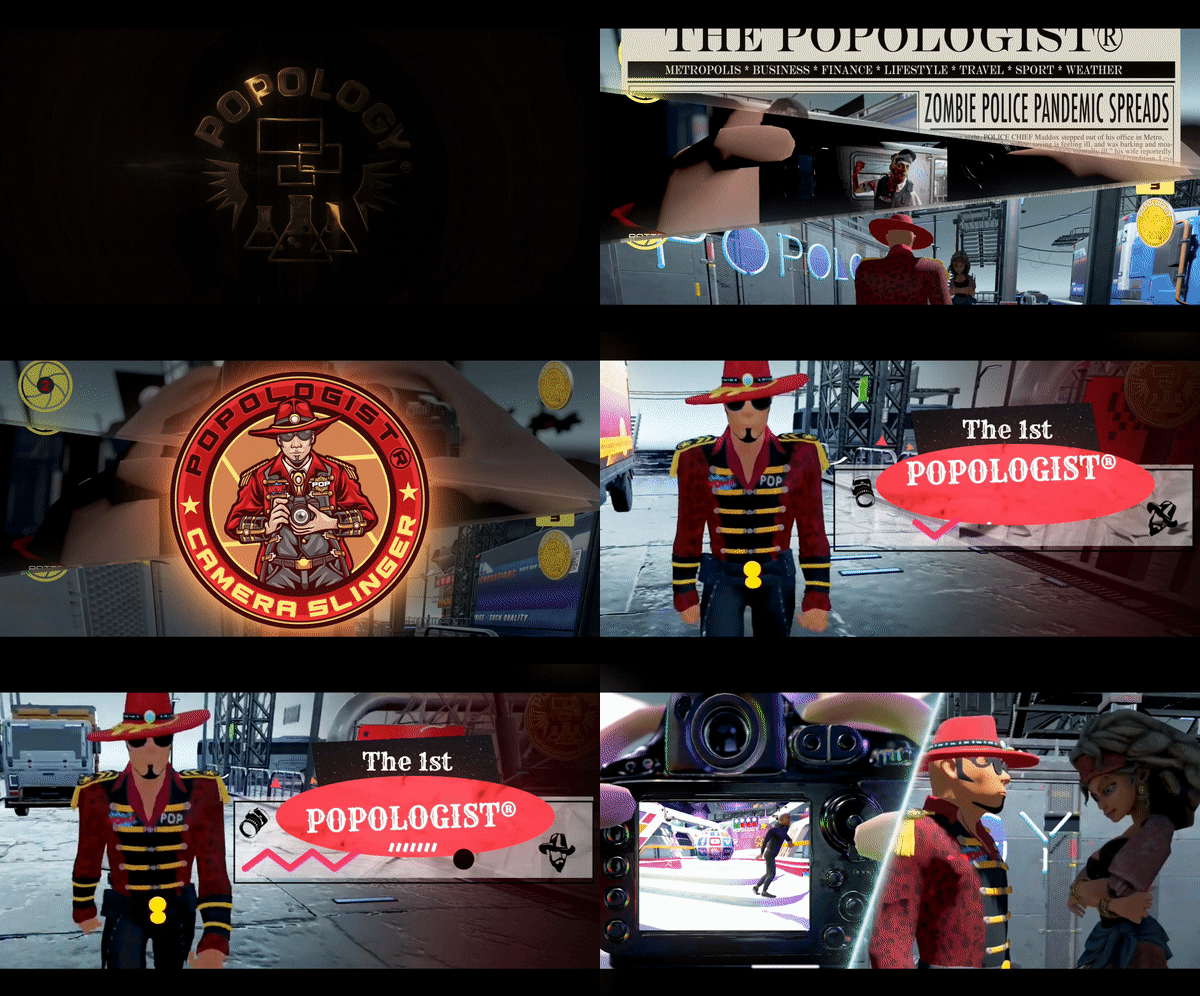
The POPOLOGIST® Camera Slinger Video Game
POPOLOGY® Networks
1st POPOLOGIST® Pillow Swag
Science Under Nature
1st POPOLOGIST® Camera Slinger T Shirt
Color-Fuchsia Pink POPOLOGY® Underwear
Funky i Puppet

Led Zeppelin, formed in London in 1968, comprised guitarist Jimmy Page, vocalist Robert Plant, bassist/keyboardist John Paul Jones, and drummer John Bonham. Their innovative fusion of blues, rock, and folk, combined with electrifying live performances, positioned them as one of the most influential bands in rock history.


Formation and Early Years

In 1968, following the disbandment of the Yardbirds, Jimmy Page sought to form a new group. He recruited Robert Plant, John Paul Jones, and John Bonham, initially performing as the "New Yardbirds" before adopting the name "Led Zeppelin." Their eponymous debut album, released in 1969, showcased a dynamic blend of blues and rock, laying the foundation for their signature sound.


Musical Innovation and Influence

Led Zeppelin's music was characterized by a seamless integration of diverse genres, including blues, British folk, psychedelia, and world music influences such as Indian and North African styles. This eclecticism expanded the boundaries of rock music, inspiring numerous artists and bands. Their incorporation of acoustic elements into hard rock compositions encouraged other bands to explore similar fusions.


The band's pioneering use of album-oriented rock (AOR) shifted the music industry's focus from singles to full-length albums, emphasizing cohesive artistic statements over radio-friendly hits. This approach influenced the development of progressive rock and concept albums in the 1970s.


Impact on Subsequent Artists

Led Zeppelin's innovative sound and stage presence have influenced a wide array of artists across multiple genres:

  • Hard Rock and Heavy Metal: Bands like Deep Purple, Black Sabbath, and Aerosmith drew inspiration from Led Zeppelin's heavy riffs and powerful performances, contributing to the evolution of hard rock and heavy metal.


  • Punk and Post-Punk: Early punk bands, including the Ramones and Joy Division, were influenced by Led Zeppelin's raw energy and musical experimentation.


  • Alternative Rock: Groups such as Nirvana, Pearl Jam, and Soundgarden have cited Led Zeppelin as a significant influence, particularly in their blending of heavy and melodic elements.


Enduring Legacy

Led Zeppelin's impact on rock music is profound and enduring. Their emphasis on albums as cohesive works of art transformed industry standards, and their genre-blending compositions opened avenues for musical exploration. Decades after their formation, their music continues to resonate, inspiring countless musicians and maintaining a devoted global fanbase.


Their influence extends beyond music into popular culture, fashion, and the business of rock music, solidifying their status as icons whose contributions have shaped the course of modern music history.


Led Zeppelin's discography is a testament to their versatility and innovation in rock music. Here's an overview of their studio albums:


Led Zeppelin (1969)Their debut album, featuring a blend of blues and rock, includes tracks like 'Good Times Bad Times' and 'Dazed and Confused.'

Led Zeppelin II (1969)This album showcases heavier riffs and includes classics like 'Whole Lotta Love' and 'Ramble On.'

Led Zeppelin III (1970)Featuring a more acoustic and folk-oriented sound, it includes 'Immigrant Song' and 'Since I've Been Loving You.'

Led Zeppelin IV (1971)Also known as 'Untitled,' this iconic album features 'Stairway to Heaven,' 'Black Dog,' and 'Rock and Roll.'

Houses of the Holy (1973)Experimenting with various styles, it includes 'The Song Remains the Same' and 'No Quarter.'

Physical Graffiti (1975)A double album featuring a mix of new material and unreleased tracks, including 'Kashmir' and 'Trampled Under Foot.'

Presence (1976)Recorded during a tumultuous time for the band, it includes 'Achilles Last Stand' and 'Nobody's Fault but Mine.'

In Through the Out Door (1979)Their final studio album before John Bonham's passing, featuring 'Fool in the Rain' and 'All My Love.'

Coda (1982)A posthumous compilation of unreleased tracks, serving as an epilogue to their career.


Beyond their studio work, Led Zeppelin was renowned for their electrifying live performances. Their concerts were characterized by extended improvisations, showcasing their musical prowess and deep connection with audiences. Notable live recordings include 'The Song Remains the Same' (1976) and 'How the West Was Won' (2003).


Their influence persists in contemporary music, with numerous artists citing them as a major inspiration. Their innovative approach to blending genres and pushing musical boundaries continues to resonate with musicians and fans alike.


Led Zeppelin's live performances were renowned for their electrifying energy, improvisational brilliance, and the deep connection they forged with audiences. Their concerts were not mere renditions of studio tracks but transformative experiences that showcased their musical prowess and stage presence.


Audience Experiences

Fans who attended Led Zeppelin concerts often recount them as unparalleled musical experiences. One attendee described their show as "the best and most memorable" they've ever seen, highlighting the band's ability to captivate and energize the crowd.

Reddit


Critical Reception

Critics have also lauded Led Zeppelin's live performances. Their 2007 reunion show, for instance, was described as "the best show that ever was," emphasizing the band's enduring ability to deliver powerful and memorable performances.


Live Recordings

While official live albums like "The Song Remains the Same" (1976) and "How the West Was Won" (2003) capture the essence of their performances, numerous bootlegs circulate among fans, offering raw and unfiltered glimpses into their concerts. These recordings are treasured for preserving the spontaneity and energy that defined Led Zeppelin's live shows.


Led Zeppelin's live performances were legendary, characterized by their improvisational prowess, extended solos, and dynamic stage presence. Their concerts were not mere recitals of studio tracks but transformative experiences that showcased their musical virtuosity and deep connection with audiences.


Notable Live Performances

  • Royal Albert Hall (January 9, 1970): This concert is often cited as one of their best early performances, featuring powerful renditions of "Dazed and Confused" and "How Many More Times."


  • Madison Square Garden (July 27-29, 1973): These performances were immortalized in the concert film "The Song Remains the Same," capturing the band's energy and the era's concert experience.

  • Earl's Court (May 1975): A series of concerts noted for their expansive setlists and the band's peak performance levels, including a memorable rendition of "Stairway to Heaven."

  • Knebworth Festival (August 4 & 11, 1979): These were among their final UK performances, drawing massive crowds and featuring classics alongside newer material.

  • Los Angeles Forum (June 21, 1977): This show is renowned among fans and bootleg collectors, often referred to as "Listen to This, Eddie," highlighting the band's improvisational skills and dynamic interplay.


Live Recordings and Bootlegs

While official live albums like "How the West Was Won" (2003) offer high-quality recordings of their performances, numerous bootlegs circulate among fans, capturing the raw energy of their concerts. One such notable bootleg is "Listen to This, Eddie," recorded at the Los Angeles Forum in 1977, esteemed for its exceptional audio quality and the band's spirited performance.


Legacy and Influence

Led Zeppelin's live performances have inspired countless musicians and bands, setting a benchmark for concert experiences. Their ability to blend structured songs with improvisational segments influenced the live approaches of artists across genres. Tribute bands and modern acts continue to draw inspiration from their stagecraft, ensuring that the legacy of Led Zeppelin's live performances endures.


Apple’s Knowledge Navigator is one of the most fascinating examples of a company envisioning the future of technology long before it became reality. Introduced in 1987, it was a concept video created by Apple to showcase what personal computing and artificial intelligence might look like decades into the future. It anticipated innovations such as the iPad, Siri, video calls,


AI assistants, and hyperconnected information networks—all of which are now commonplace.

The Concept: Knowledge Navigator (1987)


Origins

The Knowledge Navigator was part of a broader initiative led by then-CEO John Sculley to outline Apple’s long-term vision. In his book, Odyssey: Pepsi to Apple, Sculley described the idea of a "Knowledge Navigator"—a virtual assistant powered by artificial intelligence that could retrieve information, schedule meetings, and help with research.


The vision emerged during an era when personal computers were still relativel


y new, and the internet as we know it didn’t exist. Apple’s designers and engineers imagined a world where technology would seamlessly integrate into daily life, acting as a knowledge companion rather than just a tool for computation.


The Video Demonstration

The concept video depicted a professor interacting with a tablet-like device featuring:

  • A Touchscreen Interface: Much like modern iPads.

  • Voice-Activated AI Assistant: Precursor to Siri and Alexa.

  • Video Calls: Predicting apps like FaceTime and Zoom.

  • Hyperlinked Information Networks: Similar to the World Wide Web, which was still years away.

In the video, the professor uses the Knowledge Navigator to:

  • Retrieve information from academic databases.

  • Schedule meetings with other professors.

  • Display interactive graphs and models.

  • Engage in casual conversation with the AI assistant.


Key Predictions in the Knowledge Navigator


  1. Touchscreen Tablet (iPad):

    • The device strongly resembled modern tablets in both form and function.

    • It foreshadowed Apple’s release of the iPad in 2010.

    AI Assistants (Siri and Alexa):

    • The Knowledge Navigator’s conversational AI could process complex requests, similar to today’s Siri, launched in 2011.

    Internet and Hyperlinked Data (Web Browsing):

    • The concept emphasized information networks that allowed seamless browsing and instant data retrieval—years before the World Wide Web went public in 1991.

    Video Conferencing (FaceTime and Zoom):

    • The video demonstrated video calls, which became mainstream with services like Skype, Zoom, and Apple’s FaceTime.

    Cloud Computing and Remote Access:

    • The AI accessed vast libraries of information stored in databases—an early concept of cloud storage and search engines.


Reactions and Impact

Initial Reception

When unveiled, the Knowledge Navigator seemed wildly futuristic. Critics dismissed it as science fiction, while tech visionaries marveled at its possibilities. Many believed it was too ambitious for the 1980s, given the limited hardware and software capabilities of the time.


Influence on Apple Products

The ideas showcased in the Knowledge Navigator video planted seeds for the following innovations:

  • Newton MessagePad (1993): Apple’s first attempt at a tablet, featuring handwriting recognition.

  • Macintosh Computers: The user-friendly interfaces influenced Apple’s UI design philosophy.

  • iPad and iPhone (2007–2010): Multitouch and mobile computing delivered what the Navigator envisioned.

  • Siri (2011): Apple’s AI assistant brought the Knowledge Navigator’s conversational interface to life.


Legacy: From Concept to Reality

How the Vision Came True

Over the next 30 years, Apple gradually brought elements of the Knowledge Navigator to life:

  • 2007: The iPhone introduced touchscreens, mobility, and internet integration.

  • 2010: The iPad fulfilled the tablet concept shown in the video.

  • 2011: Siri turned AI-driven voice assistance into reality.

  • 2015: The Apple Watch added personal assistant capabilities to wearable devices.

  • 2023: Advances in AI and machine learning brought Apple closer to the predictive and conversational AI showcased in the concept.


A Technological Prophecy

Apple’s Knowledge Navigator stands as a testament to visionary thinking, illustrating how creative foresight can guide technological progress. It inspired not only Apple’s trajectory but also the broader tech industry’s focus on human-computer interaction, AI development, and ubiquitous computing.


Thinking different from...


Apple’s Knowledge Navigator was more than just a concept—it was a roadmap for the future. What seemed fantastical in 1987 has now become everyday reality, proving that visionary design can transform the world. Its legacy continues to shape advancements in artificial intelligence, user experience, and mobile computing, making it a cornerstone in the history of modern technology.


Voice acting is the art of performing vocal roles to represent characters or provide narration in various media, including radio, animation, video games, and commercials. Voice actors use their vocal skills to convey emotions, personalities, and narratives without the visual presence of the performer.

Cambridge Dictionary


Early Beginnings (1900s-1920s)

The origins of voice acting can be traced back to the early 20th century. In 1900, Canadian inventor Reginald Fessenden made a groundbreaking achievement by transmitting the first voice via radio waves, laying the foundation for future developments in voice technology and shaping the early history of voice acting.


Golden Age of Radio (1920s-1950s)

The 1920s to 1950s marked the Golden Age of Radio, where voice acting became a central element of entertainment. Actors performed live radio dramas, comedies, and variety shows, captivating audiences solely through vocal performance. This era showcased the power of voice in storytelling and established many techniques still used in voice acting today.


Animation and Film (1930s-1960s)

The advent of synchronized sound in animation brought new opportunities for voice actors. Walt Disney's "Steamboat Willie" (1928) featured synchronized voices, with Disney himself providing the voice for Mickey Mouse, marking a significant milestone in animation history.


 This period also saw the rise of iconic voice actors who became the voices behind beloved animated characters.


Television and Commercials (1950s-1980s)

With the rise of television, voice acting expanded into commercials, narrations, and animated series. Voice actors became integral to advertising, using their vocal talents to promote products and services. Animated TV shows provided new platforms for voice actors to bring characters to life, further popularizing the profession.


Video Games and Digital Media (1990s-Present)

The 1990s ushered in the era of video games, creating a new domain for voice actors. As games evolved with complex narratives, the demand for skilled voice actors grew, leading to performances that enhanced the gaming experience. The digital age also brought opportunities in audiobooks, e-learning, and virtual assistants, showcasing the versatility and expanding scope of voice acting.


The Acting of the Voice

Voice acting has evolved from early radio transmissions to a multifaceted profession integral to various media forms. Its history reflects technological advancements and changing entertainment landscapes, with voice actors playing a crucial role in bringing stories and characters to life across generations.


1. Mel Blanc – "The Man of a Thousand Voices"

  • Renowned as the voice behind Bugs Bunny, Daffy Duck, Porky Pig, Tweety Bird, and many other Looney Tunes characters.

  • Revolutionized voice acting by mastering distinct tones, comedic timing, and emotional range.

  • Pioneered the art of creating unique character personalities solely through voice.


2. June Foray – "The First Lady of Voice Acting"

  • Voiced beloved characters like Rocky the Flying Squirrel and Natasha Fatale (The Rocky and Bullwinkle Show).

  • Broke barriers for female voice actors in a male-dominated industry.

  • Played iconic roles in Disney and Warner Bros. animations.


3. Don LaFontaine – "The Voice of God"

  • Famous for his booming movie trailer introductions, including the iconic phrase "In a world…"

  • Narrated over 5,000 movie trailers and became synonymous with dramatic voiceovers.

  • Set the standard for narration in film marketing.


4. Paul Frees – "The Man of a Million Voices"

  • Known for voicing Boris Badenov (Rocky and Bullwinkle), the Ghost Host (Disney’s Haunted Mansion), and Ludwig Von Drake (Disney).


  • Excelled at both comedic and serious narration, lending his voice to radio dramas, cartoons, and commercials.


5. Daws Butler – "The Cartoon King"

  • Provided voices for Yogi Bear, Huckleberry Hound, Snagglepuss, and Quick Draw McGraw.


  • A key figure in Hanna-Barbera's rise to dominance in animated television.


6. Casey Kasem – "The Voice of Scooby-Doo’s Shaggy"

  • Famous as the voice of Shaggy Rogers (Scooby-Doo).

  • Hosted American Top 40, blending voice acting with radio broadcasting.

  • Helped define modern character voices in cartoons.


7. Frank Welker – "The Sound Effects Genius"

  • Voiced Megatron in Transformers and Fred Jones in Scooby-Doo.

  • Renowned for creating animal sounds and unique vocal effects in cartoons and films.


  • Holds the record for the highest-grossing actor in terms of box office earnings.


8. Jim Cummings – "The Voice of Winnie the Pooh"

  • Voiced Winnie the Pooh, Tigger, and Darkwing Duck.

  • Known for his ability to seamlessly transition between characters and emotions.


  • Continues to be a prolific figure in modern animation.


9. Tara Strong – "Modern Queen of Animation"

  • Voices Timmy Turner (The Fairly OddParents), Raven (Teen Titans), and Harley Quinn (Batman).


  • Renowned for her vocal versatility, portraying both children and adults.

  • A key figure in video games and anime-inspired series.


10. James Earl Jones – "The Iconic Voice of Power"

  • Best known as the voice of Darth Vader (Star Wars) and Mufasa (The Lion King).


  • Set the gold standard for deep, commanding vocal delivery in film and theater.

  • Inspired generations of actors with his distinct resonance and gravitas.


11 Eddie Murphy is widely recognized as one of the most versatile and iconic voice actors in modern animation. Though primarily known for his work as a stand-up comedian and live-action actor, Murphy made a significant impact in voice acting, most notably with his role as Donkey in the Shrek franchise.


  1. Donkey in Shrek (2001-2010)

    • Eddie Murphy’s portrayal of Donkey became one of the most beloved animated characters in cinema.

    • His quick wit, comedic timing, and emotional depth added charm and humor, making Donkey a standout character.

    • Murphy voiced Donkey in all four Shrek movies, as well as several spinoffs and short films.

  2. Mushu in Mulan (1998) (Almost Cast)

    • Murphy was considered for the role of Mushu, the talking dragon, but ultimately the part went to Eddie Murphy’s contemporary, Mark Moseley, who mimicked Murphy’s style for the role.

    • Murphy’s comedic persona heavily influenced how Mushu’s character was written, even though he didn’t voice him.

  3. Thurgood Stubbs in The PJs (1999–2001)

    • Murphy voiced Thurgood Stubbs, the lead character in the stop-motion animated TV series The PJs.


12 Whoopi Goldberg is a celebrated voice actor known for her powerful performances in animated films and television. Her distinct voice, charisma, and emotional range have made her a standout in the world of voice acting.


  1. Shenzi in The Lion King (1994)

    • Whoopi voiced Shenzi, the sly and sarcastic hyena in Disney’s The Lion King.

    • Her performance brought humor and menace to the character, making Shenzi a memorable antagonist.

    • Goldberg’s role helped solidify The Lion King as one of the most iconic animated films of all time.

  2. Stretch in Toy Story 3 (2010)

    • Goldberg voiced Stretch, a purple rubbery octopus toy with a mysterious and slightly intimidating presence.

    • Though a smaller role, her voice added depth and personality to the character in this highly acclaimed Pixar sequel.

  3. The Captain in Captain Planet and the Planeteers (1990–1992)

    • Whoopi voiced Gaia, the spirit of the Earth, who guided the Planeteers in their mission to protect the planet.

    • Her calming yet authoritative voice gave Gaia a sense of wisdom and strength, aligning with the show’s environmental themes.

  4. Mrs. Rabbit in A Christmas Carol (2009)

    • She lent her voice to Mrs. Rabbit in Robert Zemeckis’s animated adaptation of the classic Charles Dickens story.

  5. Uma in Descendants 2 (2017, TV Movie)

    • Whoopi voiced Uma’s mother, Ursula, in this Disney Channel animated feature, offering a playful and villainous performance as the iconic sea witch.


James Hong is a legendary voice actor with a rich and diverse career in animation, video games, and films. Known for his distinct voice, comedic timing, and emotional range, Hong has voiced numerous iconic characters over the decades, making him a celebrated figure in voice acting history.


1. Mr. Ping in Kung Fu Panda (2008–present)

  • Hong voices Mr. Ping, Po’s loving and overprotective adoptive father.

  • His heartfelt and comedic portrayal brought depth to the character, making him a fan favorite.

  • Hong reprised the role in the sequels (Kung Fu Panda 2 and Kung Fu Panda 3) and related TV specials, solidifying Mr. Ping as one of his most iconic voice roles.

2. Chi-Fu in Mulan (1998)

  • Played Chi-Fu, the Emperor’s advisor, who added humor and tension to Disney’s Mulan.

  • Hong’s performance captured the character’s arrogance and comedic awkwardness, adding charm to the film.

3. Evil Sensei in Kung Fu Panda: Legends of Awesomeness (2011–2016)

  • Voiced Evil Sensei, showcasing his ability to bring menacing yet humorous tones to animated villains.

4. Mayor Tong in Avatar: The Last Airbender (2005)

  • Hong provided the voice for Mayor Tong, blending authority and humor in his brief yet memorable role.

5. Daolon Wong in Jackie Chan Adventures (2003–2004)

  • Played Daolon Wong, a dark wizard and recurring villain.

  • Hong’s menacing voice elevated the character, making him one of the show’s most notable antagonists.

6. Mr. Gao in Turning Red (2022)

  • Voiced Mr. Gao, a wise and spiritual elder who helps the protagonist embrace her identity in this Pixar hit.


7. Supporting Roles in Video Games

  • Diablo III (2012) – Voiced Covetous Shen, the jewel-crafting NPC, bringing humor and charm to the role.

  • World of Warcraft (2004–present) – Featured in multiple roles, adding layers to the game’s immersive world.


  • Pioneer for Asian Representation: Hong helped break barriers in Hollywood for Asian actors, paving the way for greater representation in animation.

  • Versatility: He seamlessly transitions between comedic, dramatic, and villainous roles.

  • Longevity: With over 600 acting credits, Hong is one of the most prolific voice actors ever, inspiring future generations.

  • Cultural Impact: From children’s films to fantasy epics, Hong’s characters continue to resonate with audiences worldwide.


Legacy and Influence
These pioneers laid the foundation for modern voice acting, showcasing the power of voice in storytelling. They transformed the field into a respected art form, influencing countless actors and setting high standards for animation, video games, and narration.


Pay Per View Live Events
Fiverr
Join Steam buy the POPOLOGIST® Camera Slinger Video Game
Camera Slinger Promo
rBeatzRadio_Final (All) NEW-03.png
POPOLOGIST® Tim Bennett and his new Children's Book
The Adventures Of DogShoe & The Bakery Gang
POPOLOGIST® Coffee Mug
Black POPOLOGIST® Hoodie
Livestream Marathon
POPOLOGIST® White Coffee Mug
Guitar Center promoted on POPOLOGIST® Website
The 1st POPOLOGIST Camera Slinger Mascot

© 2024 COPYRIGHT  POPOLOGY® & POPOLOGIST®

215-880-5928

  • Facebook
  • Twitter
  • YouTube
  • Pinterest
  • Instagram
bottom of page