
top of page
1st POPOLOGIST®
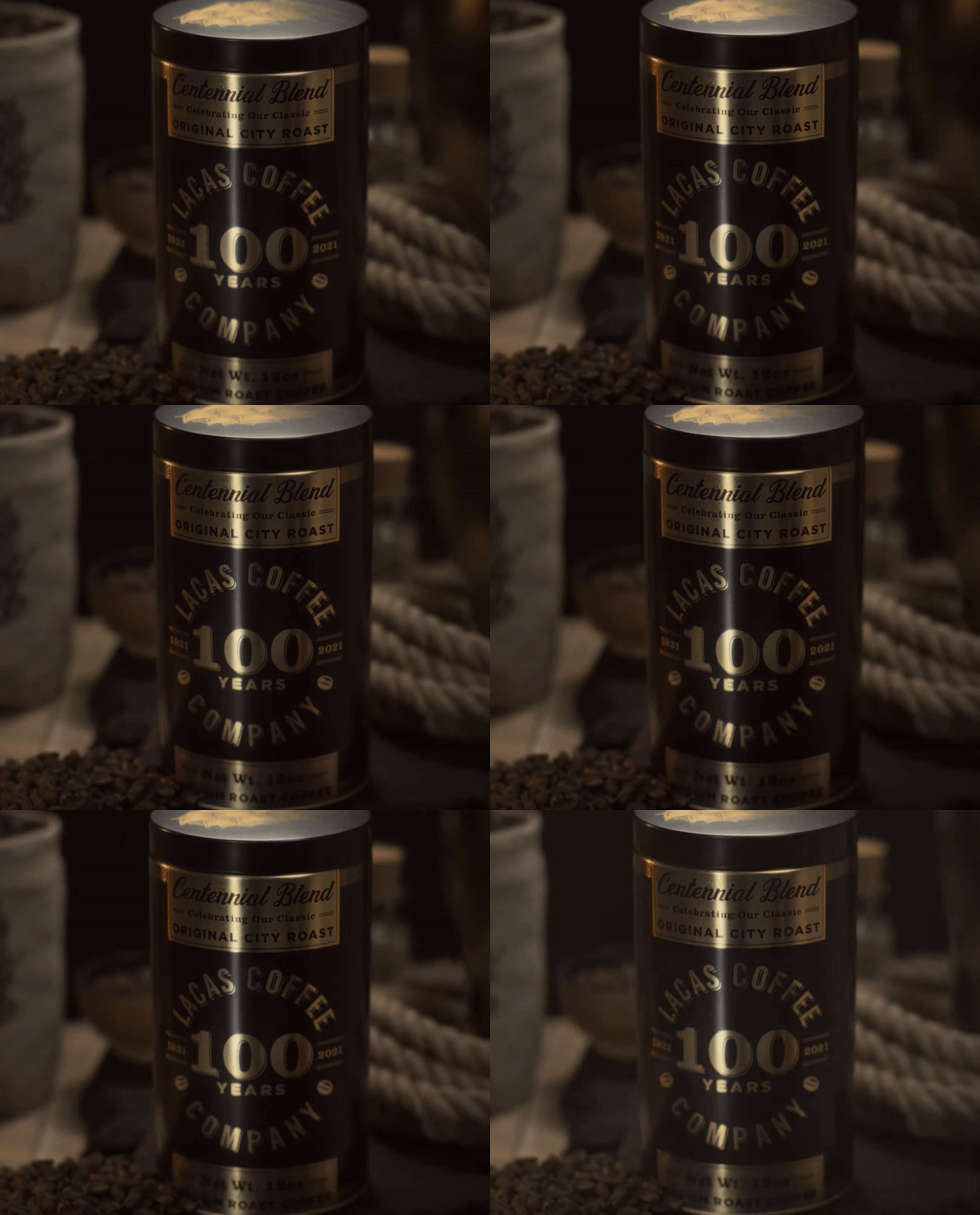
Lacas Coffee
Lacas Coffee
Credit Yak
Buy Your Swagg on POPOLOGIST®
The POPOLOGIST® Camera Slinger Video Game
POPOLOGY® Networks
1st POPOLOGIST® Pillow Swag
Science Under Nature
1st POPOLOGIST® Camera Slinger T Shirt
Color-Fuchsia Pink POPOLOGY® Underwear
Funky i Puppet

When The Saints Go Marching in

As a teenager, Louis began playing on the streets and in the dance halls of New Orleans. His undeniable talent caught the attention of Joe "King" Oliver, a prominent jazz musician who became Louis's mentor. In 1922, when King Oliver invited him to join his Creole Jazz Band in Chicago, Louis didn’t hesitate.


In Chicago, Louis's brilliance shone. Audiences marveled at his ability to bring life and soul to every note. His growing confidence and skill soon led him to New York City, where he joined Fletcher Henderson’s Orchestra in 1924. It was in New York that Louis began to innovate, turning jazz into something new.


He wasn’t just playing music—he was creating it. His groundbreaking trumpet solos captivated listeners, and his joyful energy made him unforgettable. Then came the recordings with his Hot Five and Hot Seven bands in the late 1920s. Tracks like "West End Blues" and "Heebie Jeebies" showcased his genius, revolutionizing the art of improvisation and bringing scat singing into the spotlight.


What a wonderful world

Louis Armstrong wasn’t just a musician; he was a force of nature. His music transcended boundaries, speaking to people across cultures and continents. Before Armstrong, jazz was often seen as a collective effort—a conversation among instruments. Louis changed that by elevating the soloist, giving individual expression a central place in jazz.


His rhythmic innovations laid the foundation for swing music, paving the way for the jazz revolution of the 1930s and 1940s. His voice, with its gravelly warmth, and his trumpet, which seemed to channel pure joy, became synonymous with the soul of jazz.


bare neccesities

Louis’s influence spread far and wide. Miles Davis, Dizzy Gillespie, and Ella Fitzgerald all credited him as a trailblazer who shaped their artistry. Even pop stars like Frank Sinatra admired Louis’s emotional delivery and charisma. Beyond America, Louis’s music introduced jazz to the world.


When he toured Africa, Europe, and Asia in the 1950s and 1960s, he became not just a performer but a cultural ambassador. His music spoke a universal language, bringing people together during a time when the world often felt divided.


let the good times roll

In 1964, during the height of Beatlemania, Louis Armstrong achieved something extraordinary: his rendition of "Hello, Dolly!" soared to the top of the charts, knocking The Beatles off their perch. It was a testament to his timeless appeal and his ability to connect with audiences of all ages.


Even as he faced health challenges later in life, Louis never lost his passion for music. He continued to perform, bringing joy to audiences until his final days. On July 6, 1971, the world said goodbye to Louis Armstrong, but his legacy was immortal.


black and blue

Today, we can’t imagine jazz—or music in general—without Louis Armstrong. He transformed jazz into an art form that celebrated individual creativity, laying the groundwork for generations of musicians to follow. He broke barriers, both musical and societal, and his infectious joy reminded the world of the power of music to heal and unite.


Louis Armstrong didn’t just play music—he changed it forever. And as his voice and trumpet echo through time, we’re reminded of a simple truth: the world truly is a wonderful place when we listen to the music of a legend like Satchmo.


Louis Armstrong's influence on music and culture was monumental, reaching across generations, genres, and even national boundaries. Here's a breakdown of who he influenced and why his impact was so profound:


Who Louis Armstrong Influenced

Jazz Musicians

  1. Miles Davis

    • Why: Davis admired Armstrong's technical mastery and his ability to create emotionally resonant music. Armstrong's pioneering solos laid the groundwork for modern jazz improvisation.

  2. Dizzy Gillespie

    • Why: Gillespie, one of the architects of bebop, built on Armstrong's innovations in rhythm and harmonic structure, taking jazz into uncharted territory.

  3. Ella Fitzgerald

    • Why: Armstrong’s playful and inventive scat singing directly inspired Fitzgerald’s vocal improvisations, earning her the title of "First Lady of Song."

  4. Benny Goodman

    • Why: Known as the “King of Swing,” Goodman drew on Armstrong’s swing-style phrasing and rhythmic innovations to develop his big band sound.

  5. Wynton Marsalis

    • Why: A modern jazz icon, Marsalis cites Armstrong as a key influence in his focus on technical excellence and emotional depth in performance.


Pop and Rock Musicians

  1. Frank Sinatra

    • Why: Sinatra often credited Armstrong with teaching him how to phrase a song and deliver lyrics with feeling, creating an emotional connection with the audience.

  2. The Beatles

    • Why: Though not directly in the jazz sphere, The Beatles admired Armstrong's ability to innovate and connect with audiences globally.

  3. Bing Crosby

    • Why: Crosby incorporated Armstrong’s vocal style into his crooning, helping to popularize jazz-influenced singing in mainstream music.

Global Artists

  1. Hugh Masekela (South Africa)

    • Why: Armstrong's tours in Africa inspired Masekela, a trumpeter and activist, to blend jazz with African rhythms, creating a unique musical identity.

  2. György Ligeti (Hungary)

    • Why: The avant-garde composer referenced Armstrong as a musical genius whose improvisation and rhythmic freedom influenced his approach to classical music.


Why Louis Armstrong Influenced So Many

1. A Revolutionary Soloist

  • Armstrong shifted jazz from collective improvisation to focus on the soloist, making the individual voice central to the genre. This opened the door for creative self-expression in music, influencing countless instrumentalists and vocalists.


Pioneered Scat Singing

  • His playful, rhythmic scat singing introduced a new way for vocalists to interact with music. This inspired not only jazz singers but also artists across other genres to experiment with their vocal delivery.


Mastery of Swing

  • Armstrong’s innovative use of rhythm and timing helped define the swing era. His phrasing, syncopation, and ability to “swing” even the simplest melody became a blueprint for jazz and pop musicians alike.


Emotion and Charisma

  • His gravelly voice and joyful performances showed that music wasn’t just about technique—it was about connecting with people on a deeply emotional level. This emphasis on emotional storytelling became a hallmark of great performers.


Breaking Racial Barriers

  • In a segregated America, Armstrong’s crossover appeal helped bridge racial divides. He demonstrated that music could be a unifying force, influencing artists of all backgrounds to use their art to connect with audiences.


A Global Ambassador

  • Armstrong’s international tours introduced jazz to the world, inspiring musicians in Africa, Europe, and Asia. His music became a universal language that transcended cultural boundaries.


Lasting Legacy in Innovation

  • Armstrong’s constant evolution—from New Orleans jazz to big band swing to pop classics like "What a Wonderful World"—showed artists that reinvention was key to staying relevant and impactful.


dixie land forever

Louis Armstrong’s influence stretches far beyond his era. He didn’t just inspire musicians—he changed the way music was created and experienced. His ability to innovate, connect, and elevate music turned him into a guiding light for artists across the world, ensuring his legacy lives on in every note of jazz, pop, and beyond.


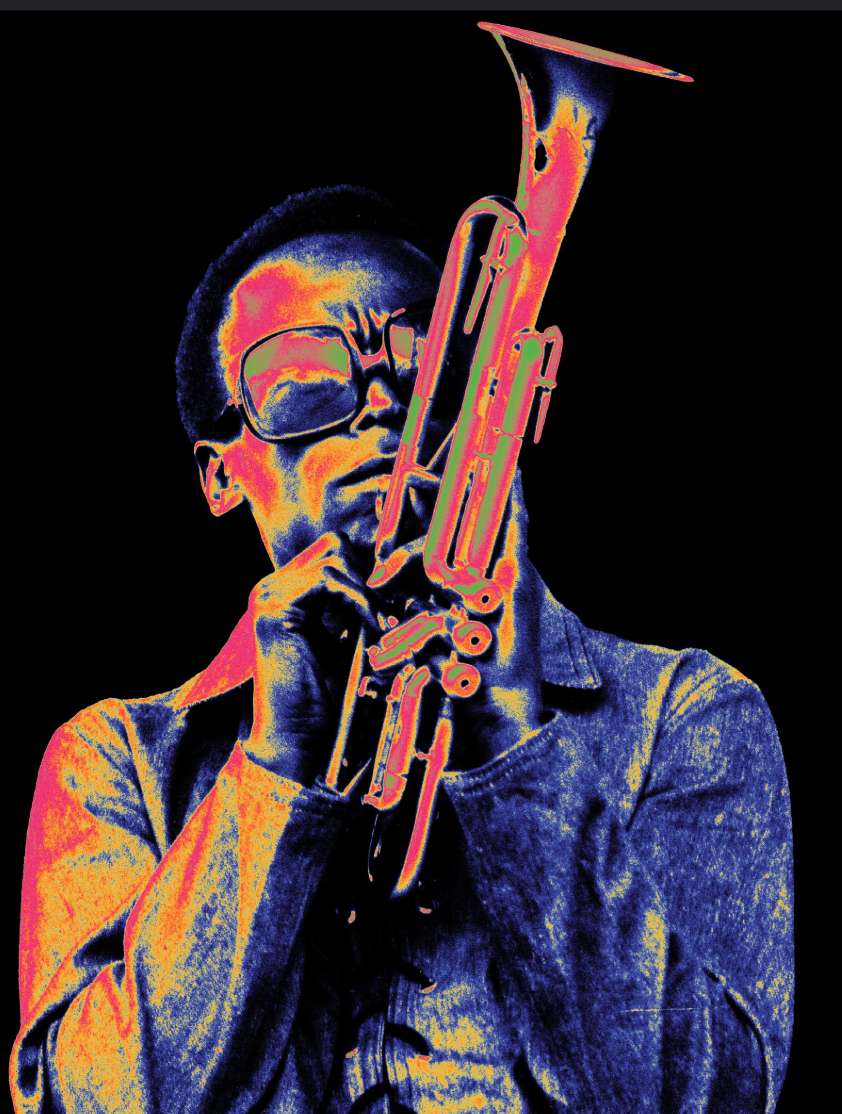


Miles Davis (1926–1991) was an American jazz trumpeter, bandleader, and composer, widely regarded as one of the most influential musicians of the 20th century. His innovative approach and willingness to explore new musical directions played a pivotal role in the evolution of jazz.


Early Life and Education

Born on May 26, 1926, in Alton, Illinois, Miles Dewey Davis III was raised in East St. Louis in an affluent African American family. His father was a successful dental surgeon, which afforded Davis a comfortable upbringing. He began playing the trumpet at age 13, receiving lessons from local musician Elwood Buchanan, who emphasized a clear, vibrato-free tone.


In 1944, Davis moved to New York City to attend the Juilliard School of Music. However, he soon became more engrossed in the vibrant jazz scene of Harlem, performing with artists like Charlie Parker and Dizzy Gillespie. This period marked his introduction to bebop, a complex and fast-paced style of jazz.


So What!

  • 1940s–1950s: Bebop and Cool Jazz

    Davis's early career was marked by his collaboration with Charlie Parker, contributing to the development of bebop. In 1949 and 1950, he recorded the "Birth of the Cool" sessions, which were instrumental in the development of cool jazz, characterized by relaxed tempos and lighter tones.


  • Late 1950s–1960s: Hard Bop and Modal Jazz

    In the mid-1950s, Davis formed his first great quintet, featuring John Coltrane, Red Garland, Paul Chambers, and Philly Joe Jones. This group produced several influential albums, including " 'Round About Midnight." In 1959, he released "Kind of Blue," a landmark album that introduced modal jazz and became one of the best-selling jazz records of all time.


  • Late 1960s–1970s: Jazz Fusion

    Always an innovator, Davis embraced electric instruments and rock rhythms in the late 1960s, leading to the creation of jazz fusion. Albums like "In a Silent Way" (1969) and "Bitches Brew" (1970) exemplify this era, blending jazz improvisation with electric instrumentation and rock influences.


  • 1980s: Later Career and Retirement

    After a hiatus in the late 1970s due to health issues, Davis returned to music in the 1980s, exploring genres like funk and pop. He continued to perform and record until his death on September 28, 1991, in Santa Monica, California.


Milestones

Miles Davis's career spanned five decades, during which he continually pushed the boundaries of jazz. His willingness to embrace new styles and mentor young talent ensured that jazz remained a dynamic and evolving art form. Davis's influence is evident in numerous genres, and his recordings continue to inspire musicians and listeners worldwide.


Miles Davis was a pivotal figure in the evolution of jazz, continually pushing the genre's boundaries and influencing countless musicians across various styles. His impact is evident in several key areas:


Innovations in Jazz Styles

  • Cool Jazz: In the late 1940s and early 1950s, Davis was instrumental in developing cool jazz, a style characterized by relaxed tempos and lighter tones. His work on the "Birth of the Cool" sessions exemplifies this contribution.


  • Modal Jazz: Davis's 1959 album "Kind of Blue" introduced modal jazz, focusing on scales or modes rather than traditional chord progressions. This approach allowed for greater improvisational freedom and has become a cornerstone in jazz education and performance.


  • Jazz Fusion: In the late 1960s and early 1970s, Davis embraced electric instruments and incorporated rock and funk elements into his music, leading to the birth of jazz fusion. Albums like "Bitches Brew" showcase his willingness to experiment and explore new sonic territories.


Influence on Musicians

Davis's collaborations and mentorship have profoundly impacted numerous artists:

  • Herbie Hancock: As a member of Davis's second great quintet, Hancock was influenced by Davis's innovative approaches, which encouraged him to explore new musical directions. Hancock recalls a pivotal lesson from Davis, teaching him that there are no wrong notes in jazz—only creative opportunities.


  • Wayne Shorter: Joining Davis's quintet in the mid-1960s, Shorter contributed significantly to the group's sound and later became a leading figure in jazz fusion.


Cultural Impact

Beyond his musical innovations, Davis played a crucial role in elevating jazz as an art form and breaking racial barriers in the music industry. His style and attitude influenced not only music but also fashion and cultural attitudes, embodying the spirit of cool and sophistication.


In summary, Miles Davis's relentless pursuit of innovation and excellence reshaped jazz multiple times, leaving an indelible mark on the genre and inspiring generations of musicians to explore and expand the possibilities of music.


Peter Rowan, born on July 4, 1942, in Wayland, Massachusetts, is a renowned American bluegrass musician and songwriter whose career spans over six decades. Raised in a musical family, Rowan's early exposure to various genres laid the foundation for his diverse musical journey.


Early Musical Influences and Career Beginnings

In his youth, Rowan was influenced by the vibrant music scene in the Boston area, particularly the sounds of bluegrass and folk. He formed his first rockabilly band, the Cupids, in 1956. His musical direction shifted after being inspired by blues musician Eric Von Schmidt, leading him to trade his electric guitar for an acoustic one and delve into the blues.


This transition eventually guided him toward bluegrass, especially after discovering the works of The Country Gentlemen and The Stanley Brothers. His admiration for bluegrass pioneer Bill Monroe culminated in an invitation to Nashville, where, in 1964, Rowan became a member of Monroe's Blue Grass Boys, serving as a guitarist, vocalist, and songwriter.


Exploration of Diverse Musical Styles

After his tenure with Monroe, Rowan's career encompassed a variety of musical styles:

  • Earth Opera (1967-1969): Collaborating with David Grisman, Rowan co-founded this band, which blended elements of folk, rock, and psychedelia, and frequently opened for The Doors.


  • Seatrain (1969-1971): Rowan joined this group, further exploring the fusion of rock and bluegrass.


  • Muleskinner (1973): Alongside musicians like Richard Greene and Clarence White, Rowan formed this band, contributing to the progressive bluegrass movement.


  • Old & In the Way (1973-1974): This seminal bluegrass group, featuring Jerry Garcia and David Grisman, played a pivotal role in introducing bluegrass to a broader audience.


  • The Rowans (1970s): Collaborating with his brothers, Lorin and Chris, Rowan blended elements of folk, rock, and bluegrass, showcasing his versatility as a musician.


Solo Career and Notable Achievements

Embarking on a solo career, Rowan released several acclaimed albums that highlight his songwriting prowess and deep roots in bluegrass and Americana music. His song "Panama Red," popularized by the New Riders of the Purple Sage, remains a staple in the genre. Throughout his career, Rowan has collaborated with a diverse array of artists, including Tony Rice, Flaco Jiménez, and his daughter, Amanda Rowan. His contributions to music have been recognized with multiple Grammy nominations and a Grammy Award for his role in the bluegrass compilation True Life Blues: The Songs of Bill Monroe. In 2012, he received the Bluegrass Star Award from the Bluegrass Heritage Foundation, acknowledging his efforts in advancing traditional bluegrass music.


LAND OF THE NAVAJO

Rowan continues to be an active figure in the music scene, performing and recording new material. His recent works include The Old School (2013), Dharma Blues (2014), My Aloha! (2017), and Carter Stanley's Eyes (2018), each reflecting his enduring passion for musical exploration and innovation.


BLUEGRASS BREAKDOWN

Beyond his musical endeavors, Rowan is known to practice Buddhism, which has influenced his artistic perspective and personal philosophy.


Peter Rowan's extensive and varied career has solidified his status as a significant figure in American music, continually pushing the boundaries of bluegrass while honoring its rich traditions.


Peter Rowan's extensive career has significantly influenced contemporary bluegrass and jam band scenes, leaving an indelible mark through his innovative approach and collaborations.


Free MexicAN AIRFORCE IS FLYING TONIGHT

Rowan's work with bands like Earth Opera and Seatrain in the late 1960s and early 1970s exemplified his willingness to blend bluegrass with rock and psychedelic elements, pushing the boundaries of traditional bluegrass. This fusion paved the way for the progressive bluegrass movement, inspiring modern bands to explore and integrate diverse musical styles.


Meet You OUt At Mission

As a member of Old & In the Way, alongside Jerry Garcia and David Grisman, Rowan played a pivotal role in introducing bluegrass to the jam band community. The group's improvisational style and incorporation of extended jams resonated with audiences, bridging the gap between bluegrass and the burgeoning jam band scene. This influence is evident in contemporary acts that blend bluegrass instrumentation with improvisational performances.


Winds of Change

Rowan's collaborations with a diverse array of musicians, including younger artists like Molly Tuttle, demonstrate his commitment to nurturing the next generation of bluegrass talent. By working with emerging artists, he has helped to perpetuate the genre's evolution and relevance in modern music.


Panama Red

Rowan's contributions have been acknowledged through various accolades, including a Grammy Award for his role in the bluegrass compilation True Life Blues: The Songs of Bill Monroe. His influence persists as contemporary bluegrass and jam bands draw inspiration from his innovative spirit and dedication to musical exploration.


In summary, Peter Rowan's fusion of genres, improvisational approach, and mentorship have profoundly impacted today's bluegrass and jam band scenes, inspiring musicians to explore new creative horizons while honoring traditional roots.


On December 29, 2024, the Chico Women's Club hosted a memorable evening featuring legendary bluegrass musician Peter Rowan, with local ensemble Broken Compass Bluegrass as the supporting act.


  • complete show w/Broken Compass - filmed by IPC


Broken Compass Bluegrass: Band Overview

Formed in May 2021, Broken Compass Bluegrass is a Northern California-based band known for their dynamic performances and innovative approach to bluegrass music. The group comprises:


  • Kyle Ledson: Mandolin and guitar

  • Django Ruckrich: Guitar and mandolin

  • Mei Lin Heirendt: Fiddle

  • Sam Jacobs: Bass


Each member is a seasoned performer, multi-instrumentalist, songwriter, and singer, contributing to the band's reputation as one of California's prominent up-and-coming bluegrass acts.

Bandsintown


Collaboration with Peter Rowan

The December 29th concert marked the second consecutive year that Broken Compass Bluegrass had the honor of opening for Peter Rowan at the Chico Women's Club. The previous year's collaboration was highly acclaimed, leading to a repeat performance. The event was anticipated to feature numerous collaborations between Rowan and the band, blending traditional bluegrass with contemporary influences.

Bandsintown


Band's Musical Style and Reception

Broken Compass Bluegrass is recognized for their tight arrangements, tasteful playing, and distinguished songwriting. Their repertoire includes a mix of jamgrass, bluegrass, country, Grateful Dead material, and original compositions. Their energetic performances and harmonious vocals have captivated audiences across various venues in Northern California, including Lake Tahoe, Sacramento, and the Bay Area.

California Bluegrass Association

Facebook


Pick A tune or two

In addition to their collaboration with Peter Rowan, Broken Compass Bluegrass has performed at notable events such as opening for Yonder Mountain String Band, where they showcased their ability to blend bluegrass with elements of rock and improvisational music.


Bluegrass on the map

The collaboration between Peter Rowan and Broken Compass Bluegrass highlights the band's rising prominence in the bluegrass community and their commitment to honoring traditional roots while embracing innovative musical expressions. Their performances continue to engage audiences, contributing to the vibrant bluegrass culture in Northern California and beyond.


Pay Per View Live Events
Fiverr
Join Steam buy the POPOLOGIST® Camera Slinger Video Game
Camera Slinger Promo
rBeatzRadio_Final (All) NEW-03.png
POPOLOGIST® Tim Bennett and his new Children's Book
The Adventures Of DogShoe & The Bakery Gang
POPOLOGIST® Coffee Mug
Black POPOLOGIST® Hoodie
Livestream Marathon
POPOLOGIST® White Coffee Mug
Guitar Center promoted on POPOLOGIST® Website
The 1st POPOLOGIST Camera Slinger Mascot

© 2024 COPYRIGHT  POPOLOGY® & POPOLOGIST®

215-880-5928

  • Facebook
  • Twitter
  • YouTube
  • Pinterest
  • Instagram
bottom of page